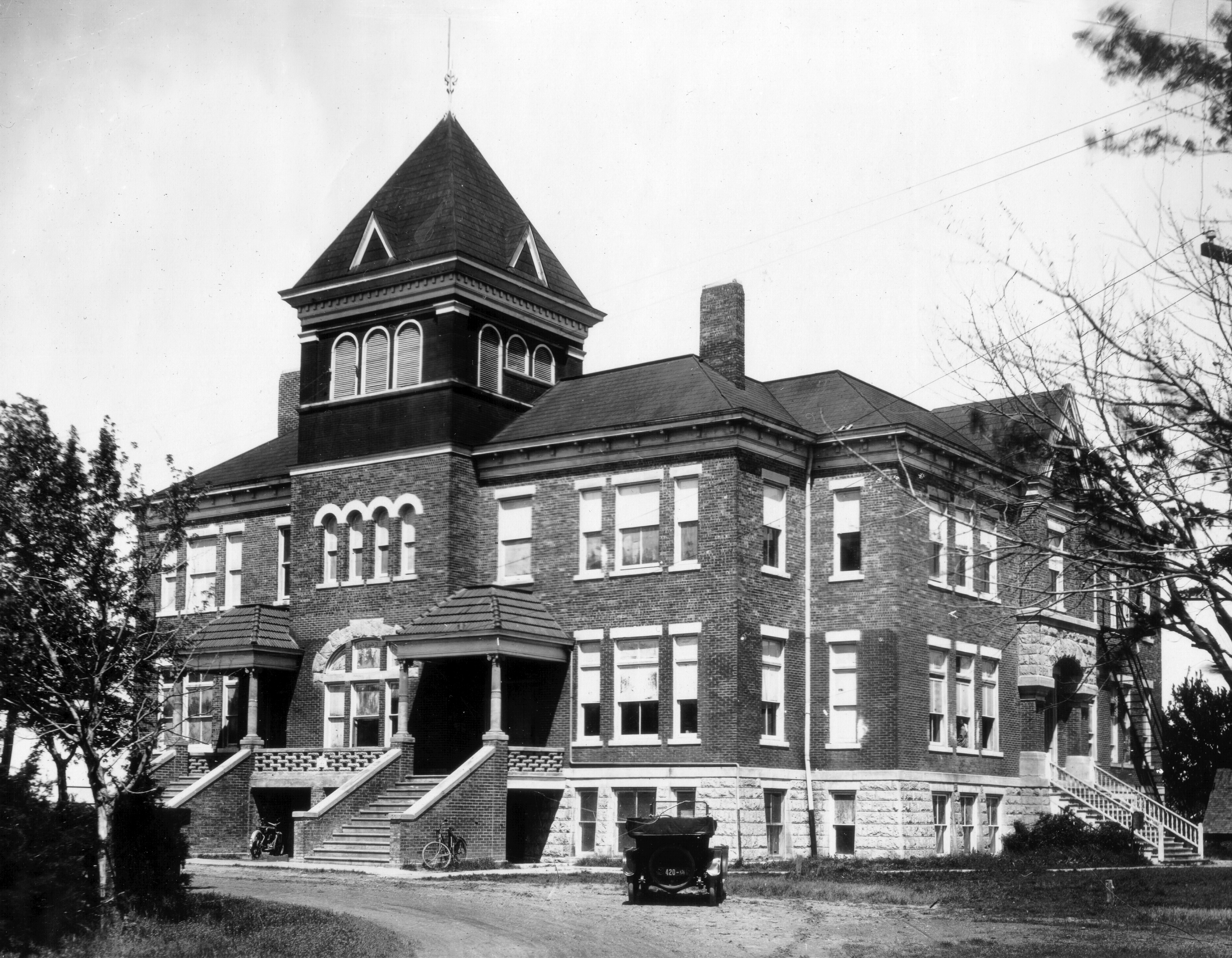
Now that I had my license, I could “go on the air.” I was living in the dorm when I received my license. I had a nice antenna at home on the farm, but now I needed to put one up on campus. FCC regulations require you to get permission to install and operate your transmitter from the property owner. I reviewed the benefits for society from Amateur Radio, screwed up my courage, and asked to see the President of the college. Somehow I mustered the right protocol and tone, presented my case, and got permission to install an antenna and operate my amateur station.
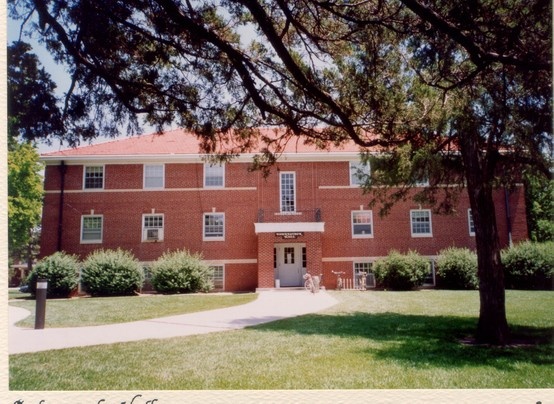
Dorm rooms aren’t large, and my roommate already had a complete photography darkroom in our room. We converted the beds to bunk beds, which made room for my radio gear. I had been listening to hams (amateurs) making contact and conversing, so I knew what I should do when I “got on the air” the first time. I don’t remember anything about my first contact, but if I had my old log book I could tell you. I spent quite a bit of time at first seeing how many contacts I could make, and trying to add some long-distance contacts.
Operating my station was a nice diversion, but I was more interested in improving my equipment than making contacts. I needed some test and measurement gear to make progress, so I started building it. I had already built a voltmeter because you can’t do much radio work without one. I needed a way to measure and adjust the efficiency of my antenna, and a way to measure frequency accurately. I also wanted an oscilloscope, so that I could “see” waveforms at various points in my “rig” (amateur station). I built the first items on the list in a few months, but I had to scrounge parts for a year or so before I could build the oscilloscope.
Keep in mind that I was taking a full course load at the same time. Everybody needs some diversion though. My all consuming interest in radio gave me the energy I needed to indulge my hobby and do course work too. The Korean War was on during this time. In order to avoid the draft, you had to make good grades in school. I managed to get excellent grades, with a couple of exceptions, and made it all the way to graduation (cum laude) three years later.
My General Class license only permitted CW (continuous wave) operation. CW is another term for Morse Code communication. You had to have a year of experience before you could get an Amateur Extra Class license, which allowed voice communication. I started to design and build the required “audio modulator” while I waited for the year to pass.
I chose “plate modulation” mode to add voice capability. A plate modulator is a high power audio amplifier that is connected in series with your DC power supply. That was another fun project. It involved big audio transformers, high power tubes, and three stages of audio amplification. I found the parts at bargain prices. It worked as expected the first time I turned it on.
One of my friends had a part time job at Matson Radio, a local repair shop. He was graduating, so I approached Leon, the owner, about picking up the job the next year. He said we could give it a try, so I started the next fall. I could tell Leon was dubious about my value to the business, but serendipity stepped in again.
Leon had an old pickup for the business, but it had a broken starter. I offered to take a look at it, and deduced that it had a broken “Bendix Drive” ($2 coupling spring). I told him if he picked up a new one at the Ford garage I could install it using my tools. It was fixed that afternoon. I don’t know what being a good mechanic had to do with radios, but he kept me on for the rest of the year.
In nosing around the shop, I discovered Leon had a complete course on TV repair. It was in a big binder about 4″ thick. He wasn’t using it, so I asked to borrow it over the summer. I enjoyed working my way through the course that summer. When I came back in the fall, Leon had gone out of business and was working for someone else. There went my income for amateur radio projects. It wasn’t long before another opportunity opened up though. I’ll get to that in the next post, which will wrap up my career stories until after I’ve told some war stories.

 Didit.Live
Lots of things lined up just right to send you in the directions you went! The closing the door at Leon’s seems to have opened a window somewhere else!
And since you studied his TV repair book I guess that’s why YEARS later we got a new picture tube and NOT a new color TV 😉
LikeLike
Oh, I’ll never live that down.
LikeLike
I forgot to say that was a classy looking college, we’ll just assume it is Grandpa’s car! And what a nice looking dorm you had too.
LikeLike
I talked them into buying a TV set for the “Student Lounge” (in the basement), and I installed a honking antenna so that we could pick up the first TV stations in Kansas. There were 79 beds in that dorm. The student body was about 160 total.
LikeLike
It’s inspiring how your passion for radio led you through college.
LikeLike