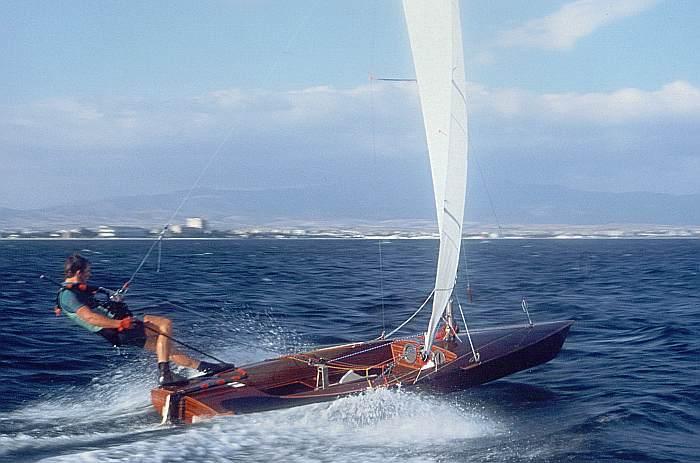
The HP Sailing Club wasn’t just some random group of geeky engineers. We had some serious competitors in the fleet. My friend Dave Gildea was one of the best and was often a winner. Dave also sailed a beast of a boat, the Contender. He went on to spend 5 years sailing a 26 footer in the South Pacific.
Dave came back looking for a job. One of the first things he said was, “Phil, I’m never getting on another sailboat.” I did have a job for Dave, but it wasn’t what he was looking for. While he was there, he told me the computer division at HP was looking for managers. I ended up back there a month later. We were in the minicomputer business then. PCs and printers came later.
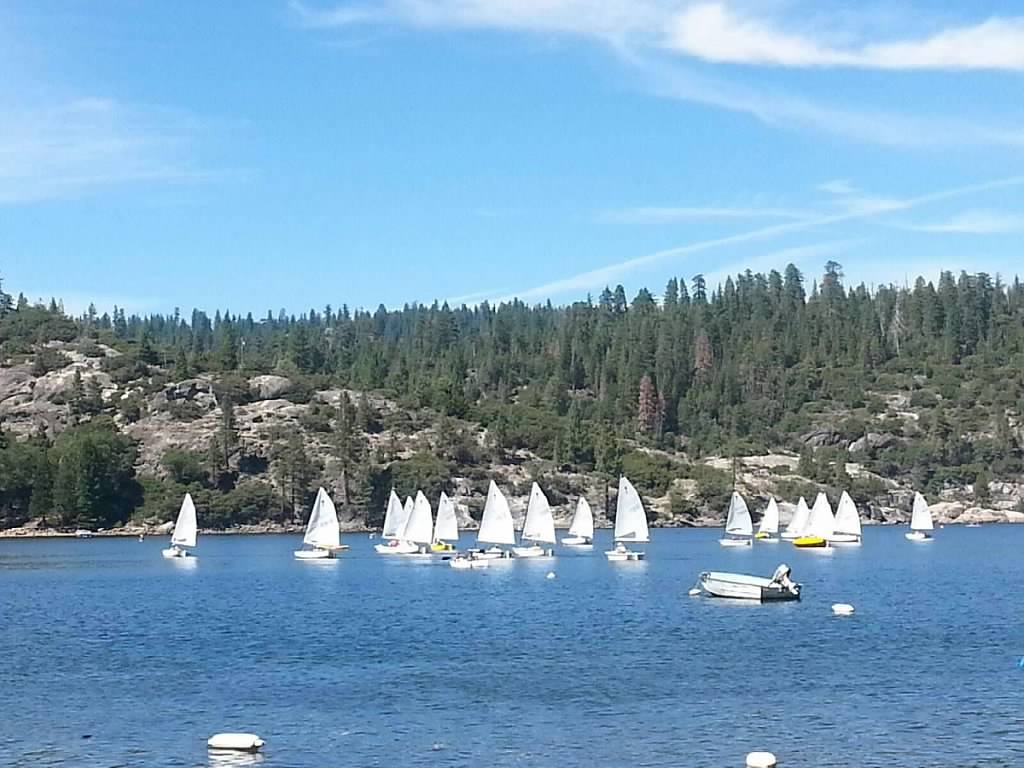
The El Toro originated with the Richmond Yacht Club on San Francisco Bay. There were a lot of El Toro sailors in the Bay Area. It may be surprising, but not inconceivable that one of our members, and also his brother, won World Championships in the El Toro class.
Sailors who weigh less than 160 pounds do well in El Toro races. The one in our fleet weighed about 150 pounds. He won about a third of our races. His brother, who didn’t race with us weighed about 200 pounds. That might be an advantage in strong winds, but I doubt that’s what they were like when he won the World Championship.
I think it’s reasonable to say competition in the HP Sailing Club was pretty stiff. How about me? After a couple of years learning, I usually ended up somewhere in the top five (out of ten to fifteen), but rarely won, with one notable exception (next post).
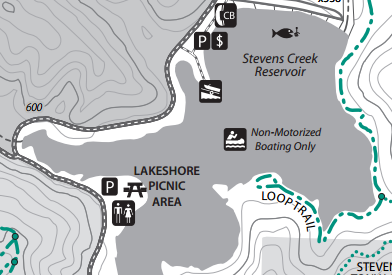 El Toro races at Steven’s Creek Reservoir were much like a tempest in a teapot. The three legs of the racing course were between 1/4 and 1/2 mile, and we sailed twice around. We’d have at least two races. The winds ranged from erratic to moderate, and there were no waves, only ripples. Racing at Steven’s Creek called for precision sailing.
Events played out in slow motion, and race strategies often took advantage of subtleties in the rules of racing. There are 91 rules currently, but only 15 directly govern what boats do when they meet on the water. Those rules are where a lot of the fun is. Arguing about them after the race is also part of the fun. A bit like the rules of golf. [Racing Rules of Sailing]
In general, boats on starboard tack have near absolute right-of-way over boats on port tack. That rule makes starts particularly interesting, and is in play for much of the race.
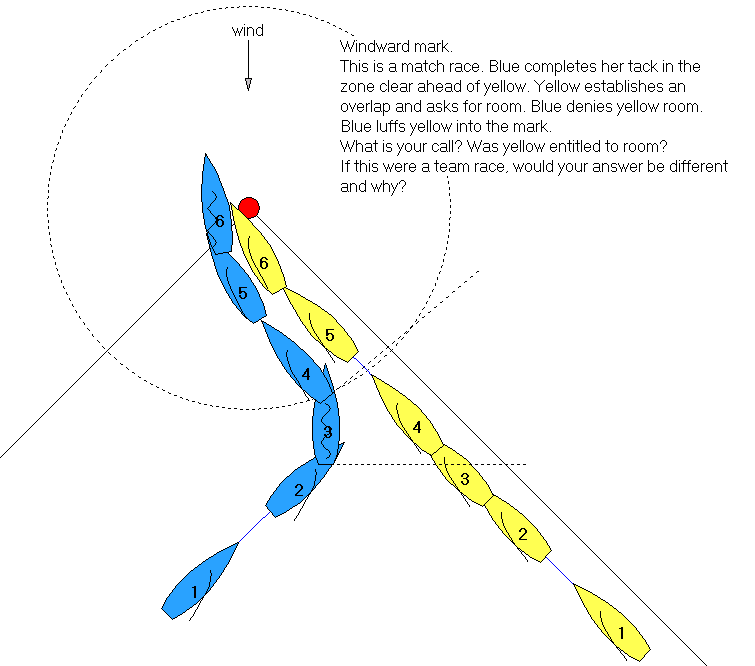 When boats are on the same tack, the boat to windward (the boat closest to the wind) must keep clear of a leeward boat. This one comes into play when sailing upwind, and it can be very frustrating for a boat that would otherwise win.
Why? The windward sailor may be forced to sail closer to the wind to avoid “falling off” toward the leeward boat. Even if that slows him down.
Races were on Wednesdays. You could tell it was Wednesday because most of us had boats on top of our cars in the parking lot. We often raced at the Palo Alto Yacht Club when the tide was in. We were not members. The caretaker left at 3:00 pm, so we arrived a bit after that.
Sometimes we raced in a 20-acre lagoon right at the yacht club. I imagine it was dredged to get fill for the nearby Palo Alto airport runway. It was like sailing at Steven’s Creek with better winds. If the tide was high enough we could sail out a little channel to the bay and race there. The winds were even better in the bay, and the waves made it more interesting.
One year the club hosted a race from Palo Alto across the bay to Alviso. We launched at a small Palo Alto harbor and hauled out about 10 miles away at the Alviso dock. A dense fog settled in on the morning of the race. About 150 boats went off in the general direction of Alviso. The sun made it a little brighter in that direction, so we groped our way through the fog, hoping for the best.
The sun came out about halfway across the bay. We hoped we could find the inlet to the Alviso channel. There were only a few small buildings at Alviso, so the blimp hangers at Moffett Field were our only guide. I finished somewhere in the top 20 boats due to a lucky guess about the location of the channel and the wind.
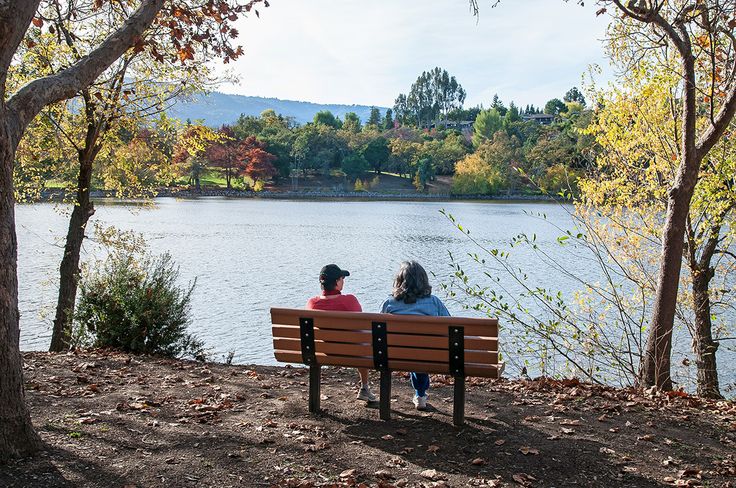 El Toros were perfect for family sailing at Vasona Reservoir, which was just a few miles away from home. Vasona had more of a park setting, and we went there in the summer to picnic and sail.
Billy Jones Wildcat Railroad was another attraction at Vasona. The railroad had a 1/3 scale steam locomotive. It weighed about 9,000 pounds or 4.5 tons. Three-dimensional objects grow more rapidly than you might think. One-third scale at 9,000 pounds translates to 243,000 pounds or about 120 tons for a full-scale locomotive. Bill Hunter, an engineering friend of mine, was the volunteer maintenance chief for the railroad in the 1990s. [Video: Billy Jones Wildcat Railroad]

 Didit.Live
Lauren drove that train when she worked there in high school
LikeLike
Now that’s just spooky.
LikeLike
Great article! You make it interesting. Can’t wait to read the other parts.
LikeLike
It’s interesting to learn that people still read this blog occasionally. I’m almost 90 now so there are no new physical experiences to relate, but I have been collecting some other kinds stories in my head. It’s probably time to get them recorded.
LikeLike