Click images to see them larger.
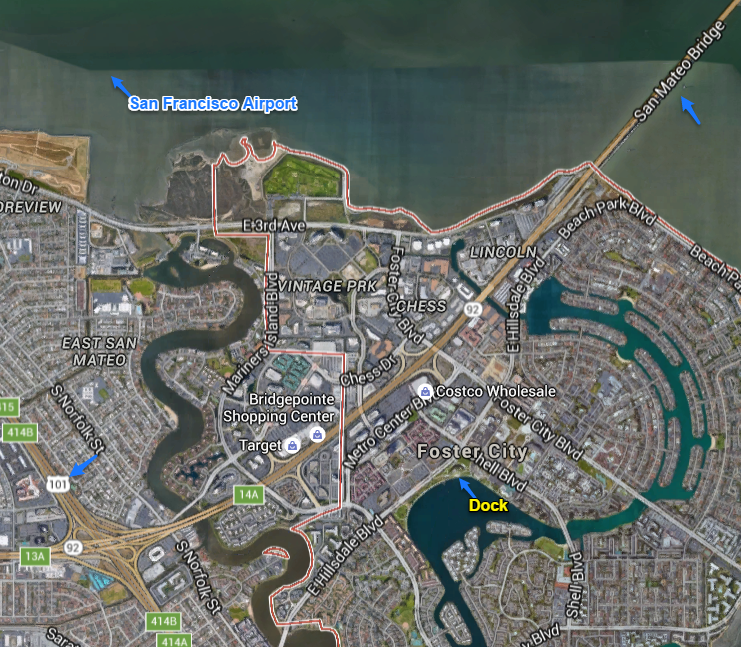 Foster City is built on mud dredged from San Francisco Bay. Someday an earthquake will liquefy it, and the whole enchilada will flow into the bay. But that didn’t bother the HP Sailing Club. The winds there range from good to fierce when the fog rolls in to San Francisco. If the tide was in and fog was forecast for San Francisco, we headed to Foster City to race.
Wind added another dimension to races at Foster City — capsizing. El Toros had enough flotation for you to crawl back in if you capsized. You could get in and bail like mad, and then try to catch up with the fleet. The race course was about a half a mile long. Twice around took around 15 minutes. Capsizing cost you about one minute, so you just might make it up. You probably wouldn’t be the only boat to capsize either, so it was well worth bailing out and going on.
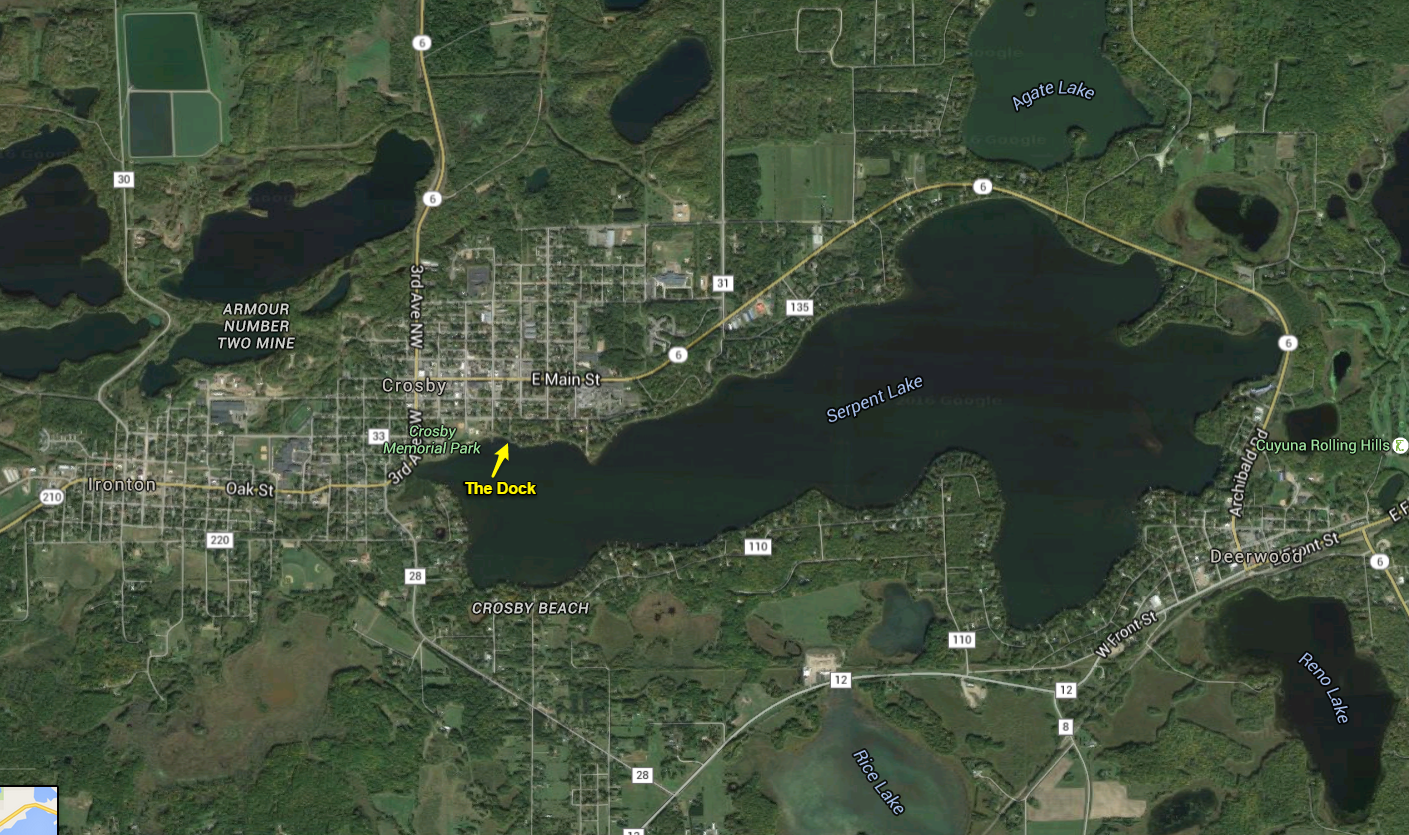 There’s more about Foster City, but first we need to go to Minnesota. Our family trekked to Minnesota every few years. We took the El Toro one time. It was great to have a week to sail any time we felt like it. And we could tie the boat to the dock instead of hauling it home at the end of each day.
We were invited to spend a couple of days at Marcia’s cousin Alaine’s cabin on [Correction] Pelican Lake. Pelican is bigger and more open than Serpent Lake, and the wind was about 20 knots. That lead to big waves with about 15 feet between crests. The sailing club had a standing argument about whether or not you could get an El Toro to surf. Most of the “experts” didn’t think so. It had a rounded bottom, and was just too short in their opinion.
I was intimidated by the waves at Pelican Lake that day. But then I decided to see if I could use the wind and the waves to surf (plane) my El Toro. It took a while to discover the right technique, but after a while I could surf any time I wanted to. Hot dog. It wasn’t long after we got back home that I had a chance to try surfing at a Foster City race. There were no waves there, but the wind was stronger than at Gull Lake.
Sure enough, I was able to surf one leg of the race course with no trouble. I finished the race two minutes before anyone else. That amazed all of them. Our two best sailors saw how I did it though. They beat me in the next race, but not by much. The rest of the fleet was two minutes behind again. There were no more arguments about surfing El Toros after that.
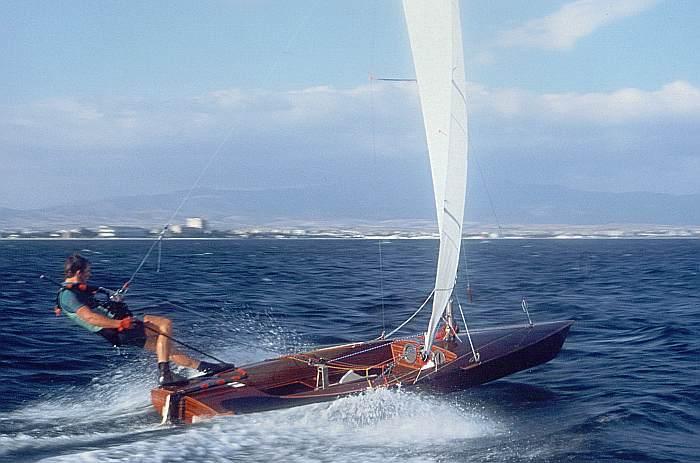 Dave Gildea brought his Contender in addition to his El Toro one race day. He let me try to sail it, but I could not get it going. This was before the advent of sailboards. If I’d had some Windsurfer experience, I might have been able to sail the Contender, instead of abruptly capsizing it each time I tried.
The Contender has a big, powerful sail like a Hobie Cat, but it has a narrow, single hull. It’s like learning to ride a bicycle. You have to develop a feel for balancing the power of the sail against your position on the boat. There was an alternative though. The wide beam of a catamaran makes it vastly more stable than a Contender, and by then I was also considering a Hobie Cat.
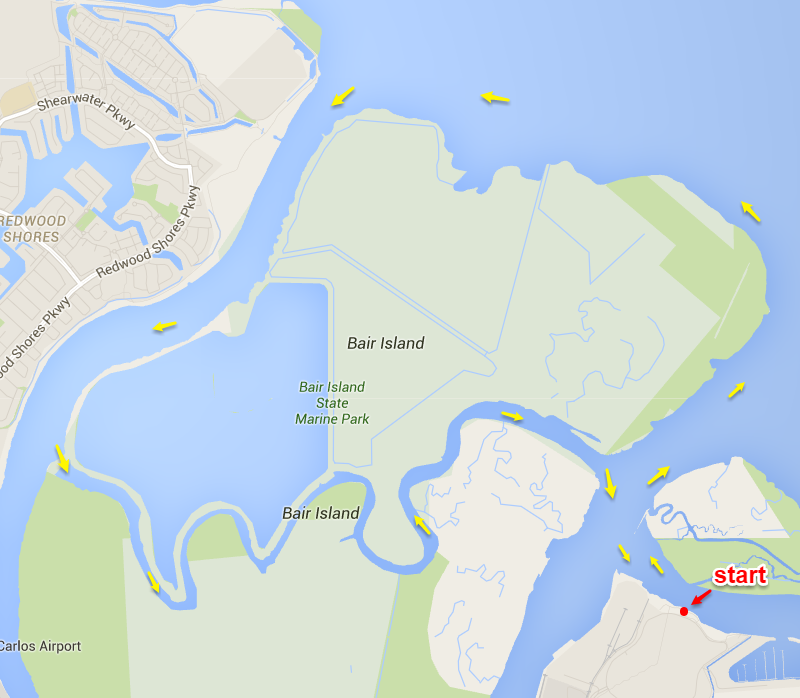 We also held an El Toro race every few years at Corkscrew Slew, another place on the bay. The slew is about 100 feet wide, so it requires a lot of tacking to make your way through it. It’s shallow too. You can’t get too near the banks, or your rudder will get stuck in the mud. Around 50 boats showed up for those races. You can imagine the confusion that followed.

 Didit.Live