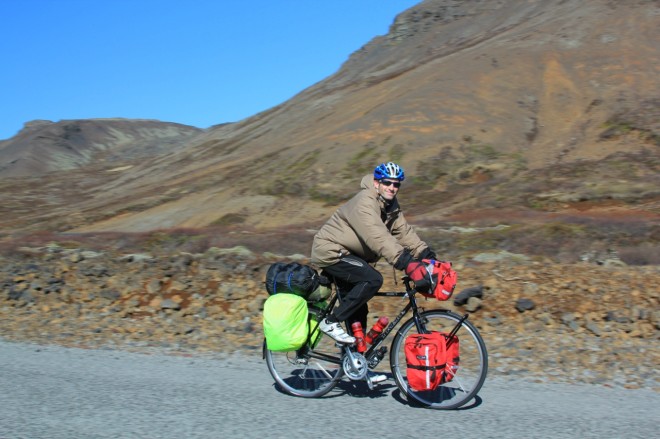
“The journey is the destination:” If you’re lucky, that axiom is true for your travels on foot, by bicycle or by ship. That’s why I found bicycle touring so rewarding. That may seem enigmatic unless you’ve experienced it yourself. It’s all about being “in the zone.”
The day’s routine is part of the magic of touring, but a detailed record of each day is probably of little interest for most readers. I included bits and pieces of that in the previous post. I’m going to describe the typical day now. From here on, I’ll write about just the highlights of this tour. I hope that makes the rest of these posts less plodding.
The daily cycle (pun intended) on tour
I consider Teva® (velcro) sandals an essential piece of personal gear if you use “clip-in” shoes for riding, which you should. You’ll need the sandles when in camp. They’re particularly nice for showering in the rustic accommodations you’ll encounter.
Your day starts when you get out of your sleeping bag. Once you’ve dressed, it’s time for breakfast. That can be cold, or something you cook, depending on circumstance or impulse. After cleaned up your kitchen, it’s time to start packing things up. You’ll probably want to don your riding clothes first to save changing later. Fill your water bottles at this point too.
General rule for loading a bike: Put your small, heavy items in the front panniers, and bulky items in the rear ones. Things you’ll need ready access to — map, camera, sun glasses, etc. — go in your handlebar bag. Your tent and sleeping bag go on top of the rear rack. One last look at your map, and off you go.
This sequence is simple when it’s dry. It’s more interesting when it’s raining. Unless you can get under a roof or tarp, you’ll need to pack everything while you’re inside your tent. Finally, pack up your tent, load it on the bike, and off you go. You did bring proper rain gear, didn’t you? (I packed this way at Prince Rupert, BC during a veritable downpour)
Whether you’re alone or with a group, getting more food is a daily task. Food may be available at the next destination, or you may be able to buy it on the road. It’s best to carry some emergency rations as well. Lunch is usually something cold. I liked to plan my rides so I could stop at a restaurant for brunch too.
It’s usually best to set up your tent soon after your arrive at your next camping spot. It may be at a campground, or somewhere off the road and out of sight (just lift your bike over the fence and go into the woods). Once your tent is set up, you can unpack for easy access to your clothes, personal items, books, etc. You may also need to escape in from mosquitoes or black flies in there too.
The rest of your day is (mostly) free time. You’ll want to inspect your bike, fix any problems, and lube the chain at some point. Then you can hike, read, swim, take pictures, write in your journal, etc. I found I’d rather spend more time on the road, and less time in camp though. You can easily ride eight hours or more a day if you’re in proper shape, and keep eating on the way. You’ll likely have a smartphone too, although I recommend you consider yourself off the grid.
Dinner always seems well earned. Clean up your kitchen when you’ve finished, and be sure your food is where the bears can’t get it. The day is done when you close your tent flap and slip into your sleeping bag. You’ll know you’re having fun when your tent begins to feel like home.

 Didit.Live