Preface

Previously, I mentioned the role of the Cordilleran Ice Sheet in the creating the scenery of the Okanagan. It had an even bigger role in creating the geology of Eastern Washington.
Grand Coolee is an interesting artifact left behind by the Missoula Floods that the Cordilleran unleashed. It is a large gash the floods eroded in solid basalt. It came within a mile of diverting the Columbia River permanently.
Grand Coolee Dam was built in the canyon of the Columbia River, but was named after that artifact. The town of Coolee City is built on the narrow strip that was left between the Columbia and the Grand Coolee.
Switch the map to “Earth/Satellite View” for better perspective.
Follow these links for extra credit:
https://en.wikipedia.org/wiki/Coulee
https://en.wikipedia.org/wiki/Grand_Coulee
https://en.wikipedia.org/wiki/Grand_Coulee_Dam
https://www.youtube.com/watch?v=27BP4CL66Tk
Saturday
My destination today is the little town of Wilbur. I’m beginning to feel like a horse that smells the barn (like our pony when I was a boy). It will be a tough ride, but I’m lighter and stronger than I’ve been in years. I could have split the ride into two days, but this was familiar country that didn’t hold much intrigue. Besides, I hope to be home tomorrow.
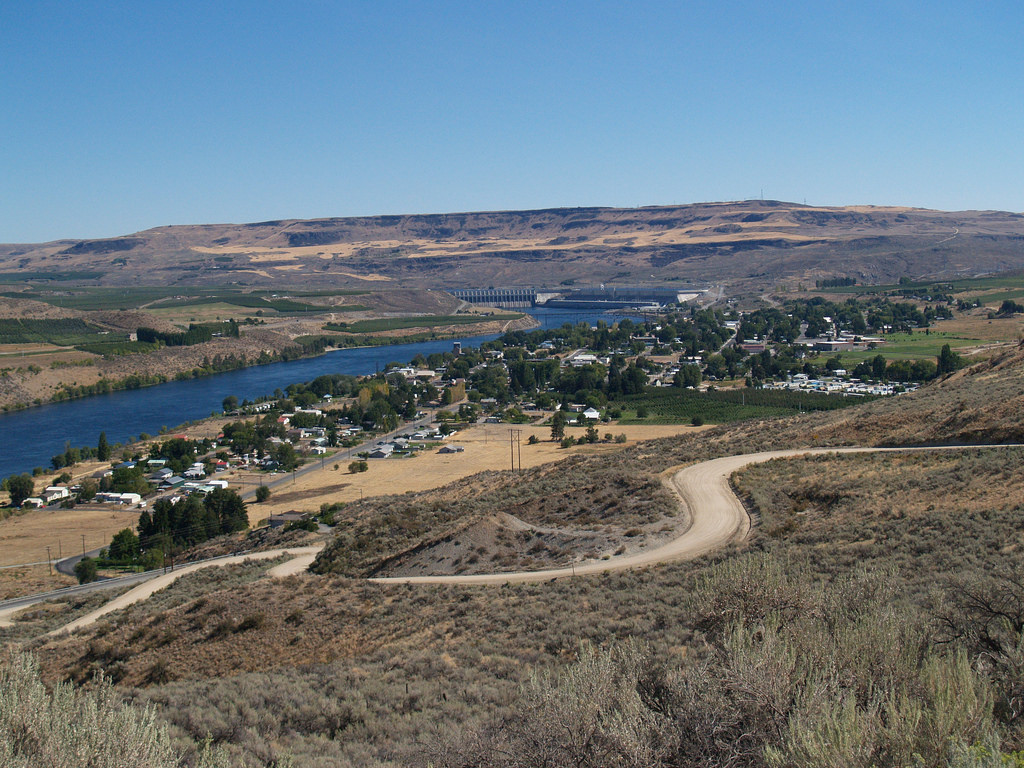
The ride started with a climb up to the Watertown Plateau from Bridgeport in the Columbia River valley. This country is nearly empty. It’s the kind of place where the miles just slide by if you let yourself get “in the zone.” Eventually I was looking at the Columbia River from a high vantage point above Grand Coulee, and soon I was coasting down to the town.
I knew the climb back up from Grand Coulee to the plateau was going to be tough, so I used my glycogen window to prepare. (The idea is that sugars readily convert to glycogen in your muscles during the half-hour after strenuous exercise.) I ate a bunch of figs, the cyclist’s friend, just before the long coast down to Grand Coulee. I also drank plenty of water. I bought a quart of orange juice (one of the very few juices you can buy that is 100% fruit juice) when I got to the grocery store. I would drink it with water on the way (diluting it is another cyclist’s trick). It was a hot day, but now I felt ready to face the climb ahead and the rolling hills on the way to Wilbur.
It seemed my strategy worked. I felt strong all the way up the grade. The only problem was the heat. There was a light tailwind blowing up the grade. Because I was going slow in the same direction, I didn’t have the usual bicyclist’s advantage of air cooling. I had to stop every 100 yards or so to let the slight breeze cool me off. The situation was similar to my earlier encounter with black flies at Burns Lake, but I was spared the bites. By the time I got to the top, the breeze turned into a headwind, and I cooled off nicely.
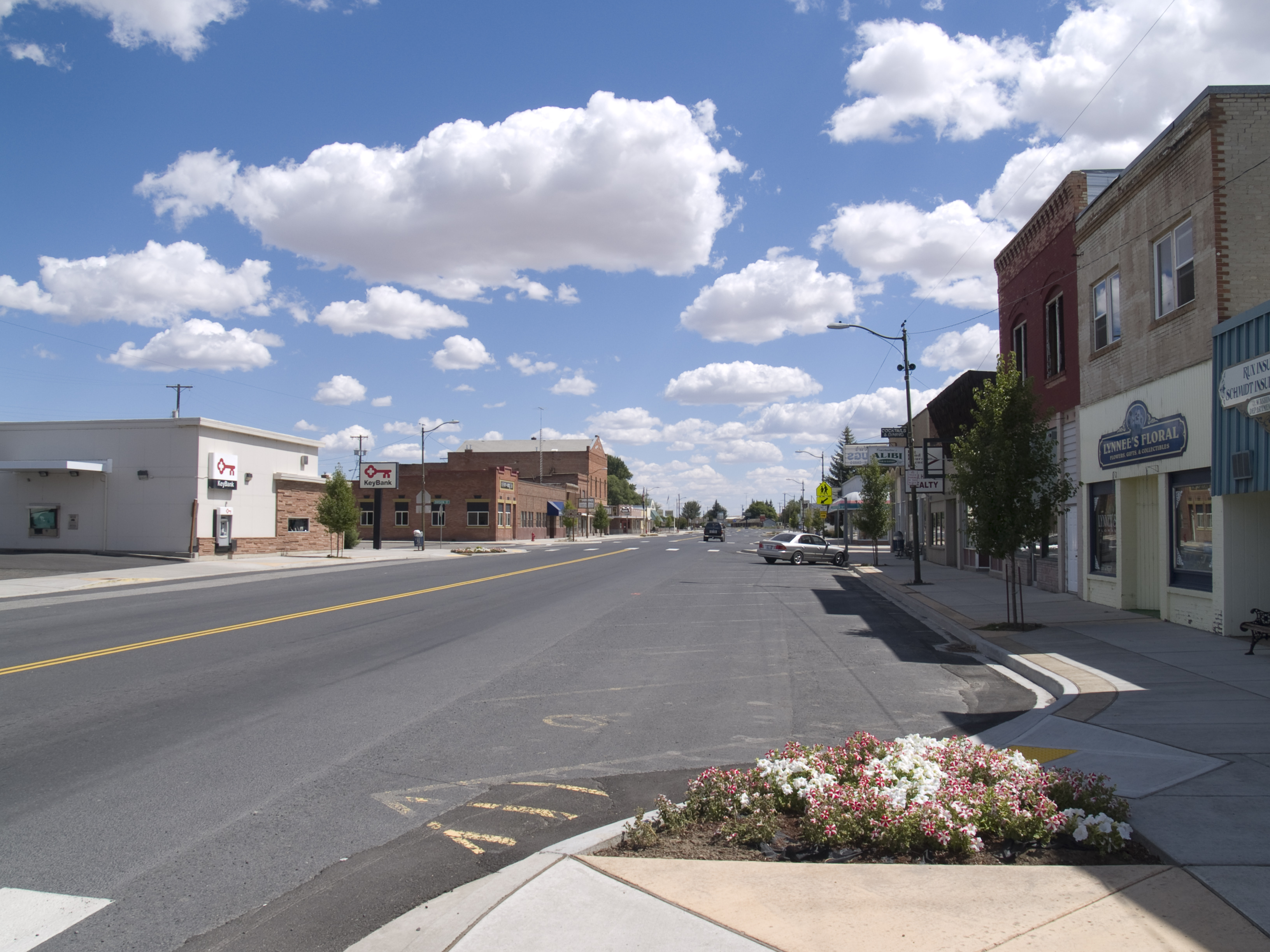
The campground in Wilbur was nice, the showers were clean, and it only cost $4.00 for the night. I had a grassy area under some shade trees all to myself. It was a short walk in to town, so I celebrated my arrival with a steak dinner. There was a downside though. By the time I got back to camp, hay fever caught up with me.
Sunday, June 29, 1997
I started the day with breakfast in Wilbur. Nothing like some good greasy food to get you going. 😀 Then I headed for Spokane. As I rode along, I thought about my experiences on the tour. One aspect was how my perspective changed as I went along. After Bob went on ahead, it felt like I was just starting out on my real journey. Later on it dawned on me that in a sense I was totally dependent on my bicycle and my body to get me through. And when I woke up one morning, I realized that my tent had become the place I lived.
Navigating through Spokane on a loaded bike was not the same as just riding around downtown. I picked a route with a minimum of traffic and climbing, but there were many stops, which are more tedious with all the weight. I even got slightly off track at one tricky point in the route. At the end, when I reached the hill to our house, I had to push the bike up the steepest spots. I didn’t need to do that anywhere else on the tour.
And there I was, a month and 1,985 miles later. Aside from Marcia’s greeting and a residual glow from the tour, it was like I never left home. And I had big ideas about more tours I wanted to take. I also knew what changes in gear I needed to make.

 Didit.Live
“Gee, it’s great to be back home again” (John Denver, 1970’s)
LikeLiked by 1 person
Well, I gotta say the hill to your house is pretty steep! Great trip~
LikeLike