Mountains and creeks are two of the words/things that I most resonate with. Trees are another. I’m sure that’s true for many other people as well. I suspect it’s innate. Think back 100,000 years ago. Mountains, creeks and trees were a matter of survival for people then. No doubt a lush savanna seemed equally important to them as well.
“The streams of the mountains please me more than the sea.” ~Guantanamera lyric, (maybe appropriated from Jack London, Mark Twain or John Muir?)
“Let children walk with Nature, let them see the beautiful blendings and communions of death and life, their joyous inseparable unity, as taught in woods and meadows, plains and mountains and streams of our blessed star, and they will learn that death is stingless indeed, and as beautiful as life.” ~John Muir
This post is a preface to the series I’ll write on backpacking. I’ll soon find out if I took our daughters and my notebooks to Arizona last season. I think I was counting on the spare time to write them up there. The series won’t be nearly as good without them, but I can get a start here, and look for them when I get there.
If special feelings for mountains and creeks is not nature (innate), it’s nurture. The first time I remember being in the mountains was at Spar City, Colorado. I was probably five years old. I’ve been captivated ever since.
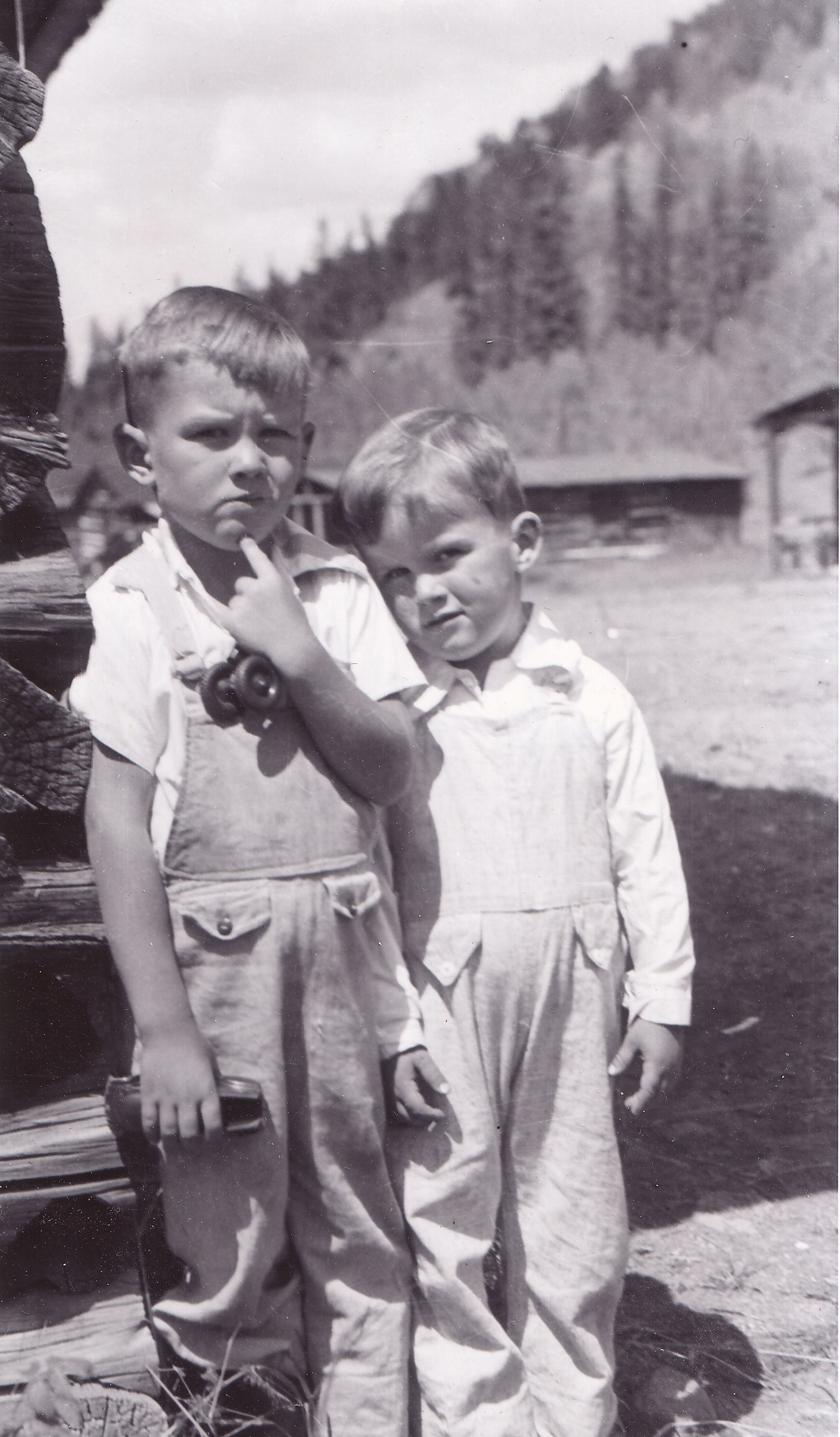
I only have fragmented memories of that. A few stand out — my dad sawing an opening for a window in my grandparent’s log cabin, the Coleman lantern that hung from a beam for light at night, the wood cook stove and the smell of aspen burning in it — and a general feel for the landscape, the creek just behind the cabin, and the smell of pine trees.
Spar City was a small silver mining town. Thirty log cabins, the jail, a saloon, and a “dance hall” was all that remained when we were there. Spar City was a satellite of Creed, Colorado, a famous mining town where people like Doc Holiday hung out, and where Bob Ford who shot Jesse James was shot. “Spar” is short for feldspar. Feldspar is a component of granite — a telltale mineral that indicates the possible presence of precious metals.
The next time we were in Spar City was after WW II. When we arrived, I remembered the smell of pine trees. And there was the perpetual creek behind the cabin. I saw that Lime Creek had a series of beaver dams that I didn’t remember from before. The cabin was very familiar too — one main room, about 16′ X 16′, and a kitchen attached to the back.
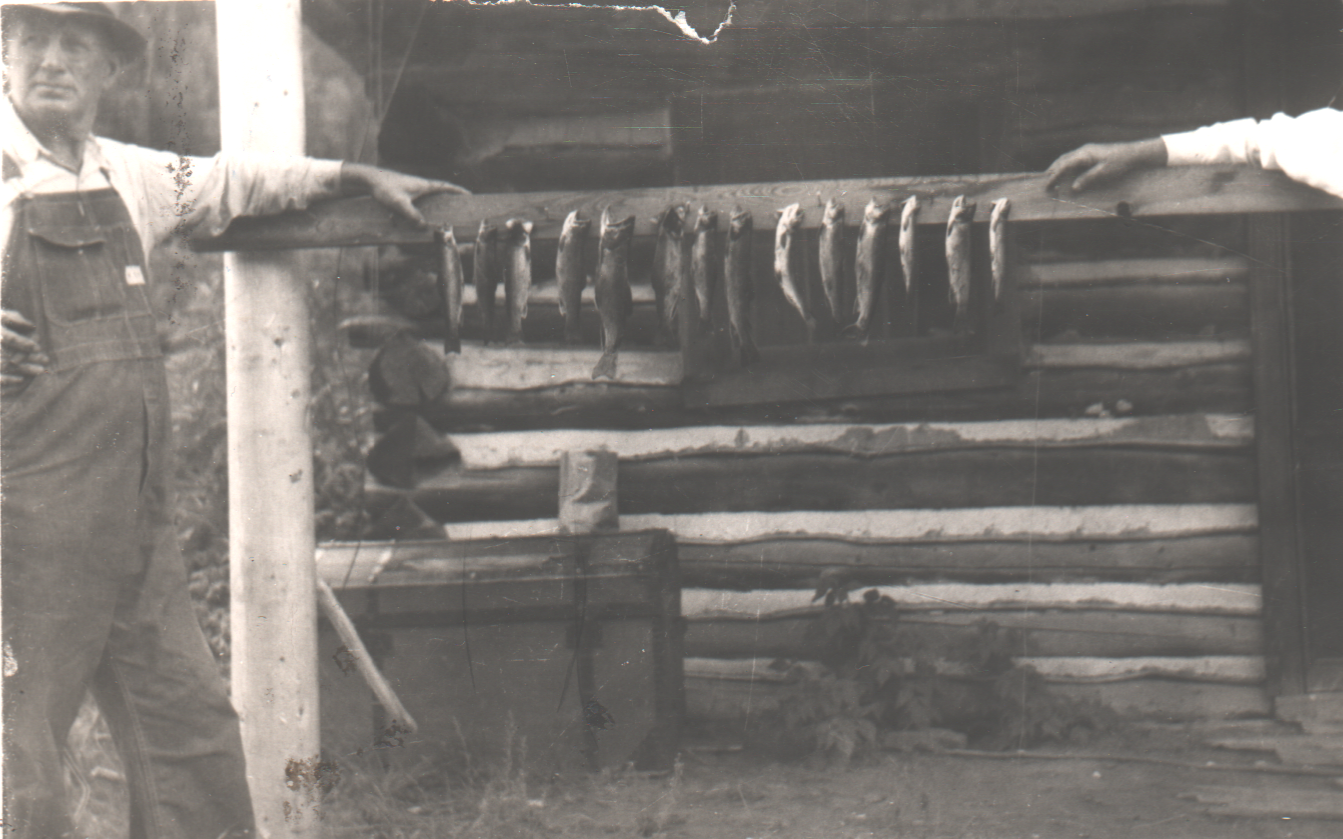
Trout fishing was a top activity for us there. Red Mountain Creek was our favorite spot. It had a series of little rapids and pools, and was set in a nice little valley. We also fished the Rio Grande River, and one summer I caught a 14″ trout there. That was the camp record for the year.
Miners Creek tumbles down the face of a mountain near Creed. I kept suggesting that we try fishing there. But dad would say, “Ah, that’s too close to town. It’s all fished out.”
The last time we were in Creed, he agreed to give it a try though. It was three times as steep as Red Mountain Creek, and had a nice series of deep pools. There were plenty of nice trout there. We both caught our limit that day.
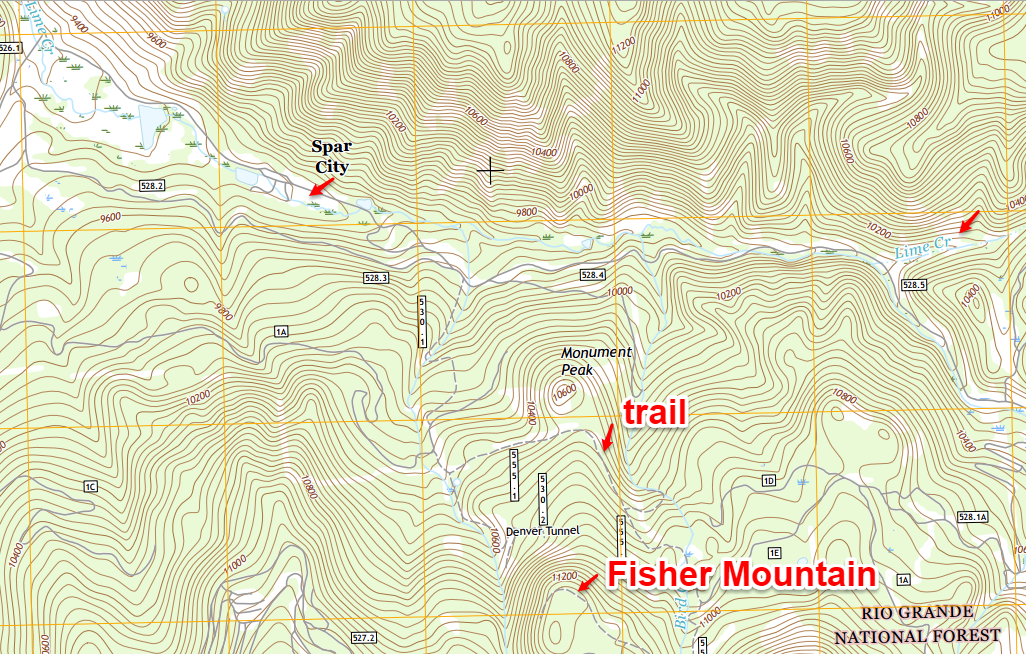 Paul and I discovered a topographical map of the area tacked to the wall of the old dance hall in Spar City. It inspired us to climb Fisher Mountain.
We invited Everett Horton — the camp caretaker’s son — to go with us, and set off with little more than a knife, and lunch in a paper grocery bag. We counted on little creeks for water.
We followed a trail for the first part, stopping to investigate Pete’s mine on the way. A sheep herder came by while we were there. We left the trail when we were close enough to see a route to the top of the mountain. It was easy at first, and then quite steep for 1,000 feet or so. After that it was just a stroll to the top.
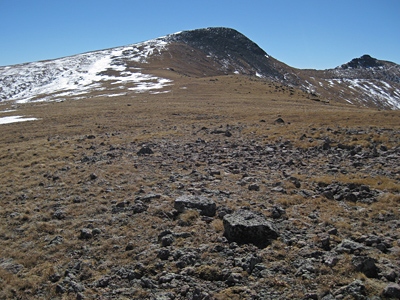
Fisher Mountain is 12,855 feet high, about 3,000 feet higher than Spar City. There is a spectacular view from the top. You see mountains in all directions for 50 to 100 miles. After surveying the scene, we sat down and ate our lunch. A gust of wind (start of a thermal) picked up our empty paper bag. It slowly circled the peak three or four times, and then spiraled up out of sight.
There were many loose rooks lying around on the top, some the size of a volleyball. Naturally, we rolled one off the top to see what would happen. What a surprise. It rolled down of course, but quickly started bouncing off the side of the mountain. It was going at least 200 mph, with one bounce about a quarter of a mile in length. That was so much fun we had to roll a few more of them down, but then decided we’d better quit.
I was captivated by the mountains and all that adventure. Unfortunately, Grandpa Miller decided to sell the cabin after that, so I didn’t get back to the mountains until I was in California.
My first encounter with the mountains there was a trip to Yosemite. It was organized by Charlie Everhart (eventually my best man). Five of us Army buddies rented sleeping bags, and I drove Charlie’s car to Yosemite. What splendid country. Simply too much to take in on a short trip.
We were pretty naive. We decided to swim in the Merced River in the valley. I jumped in at a deep spot and it was so cold I couldn’t breathe. The current quickly swept me down to a bank where I was able to climb out. Then when it came time to camp we learned that we needed a reservation (even back then). No problem, we just drove down the road until we spotted a flat area, rolled out our sleeping bags, and spent the night.
The next day we hiked to the top of Vernal and Nevada falls. That night we returned to San Francisco via Fresno, which was one tenth the size it is now. I knew I’d be back to Yosemite again.

 Didit.Live
and so too is the idea born to find a flat (safe) spot on the side of a road to sleep when campsites are full!
LikeLike
Now you know where I learned that little trick. It’s easier on a bicycle. Once you put your bike over the fence and hide it in the woods, nobody would ever find you.
LikeLike
Brings back very old memories : 1938, 1946 and 1947, my best guess. 600 miles in a 1940 Ford on all 2-lane, some unpaved roads. Sleeping in the desert outside Alamosa. 15 miles of one-lane road from Creede to Spar City. Wading in a cold Rio Grande.
LikeLike
Dad changed the jets in the carburetor to lean the mixture for high altitudes. That’s something you need to adjust in real time when you climb to higher altitudes in an airplane. The computer automatically takes care of that for modern automobiles.
LikeLike