I was already thinking about an aerobatic airplane of my own while I was still flying with Steve Wolf. A “one-hole” (single-place) Pitts Special would have been nice, but expensive. I thought about building one myself, but that would take three years. The friends I talked with recommended a Citabria, which is a production (not experimental) aerobatic airplane based on the Aeronca Champ design.
I looked in the usual “Airplanes for Sale” publications (remember, this was before the Internet) but found very few Citabrias, and none of them were located nearby. I was reading Sport Aviation regularly at the time, and a few Citabrias were listed in the ad section. One of them was a low-time (desirable because it hasn’t been flown much) Citabria near Portland. I called the number, and the owner’s mother answered. She said he was on an extensive trip, but would be back in a couple of weeks.
About three weeks later the owner called to find out if I was still interested in the Citabria. He had just returned and found my inquiry on top of the stack where his mother put them. He said he was going to work down the stack, and planned to sell the plane to the first person that arrived with a cashier’s check. I told him I’d meet him at the Portland airport “tomorrow.” Now that’s what I call serendipity.
He told me he was selling the airplane because he lost his medical. He was an airline captain and had blacked out momentarily while flying a 747. Twice. The first time he decided not to report it, although it’s required by FAA regulations. The second time he reported it, but his doctor could not identify the cause. That meant he lost his medical certificate.
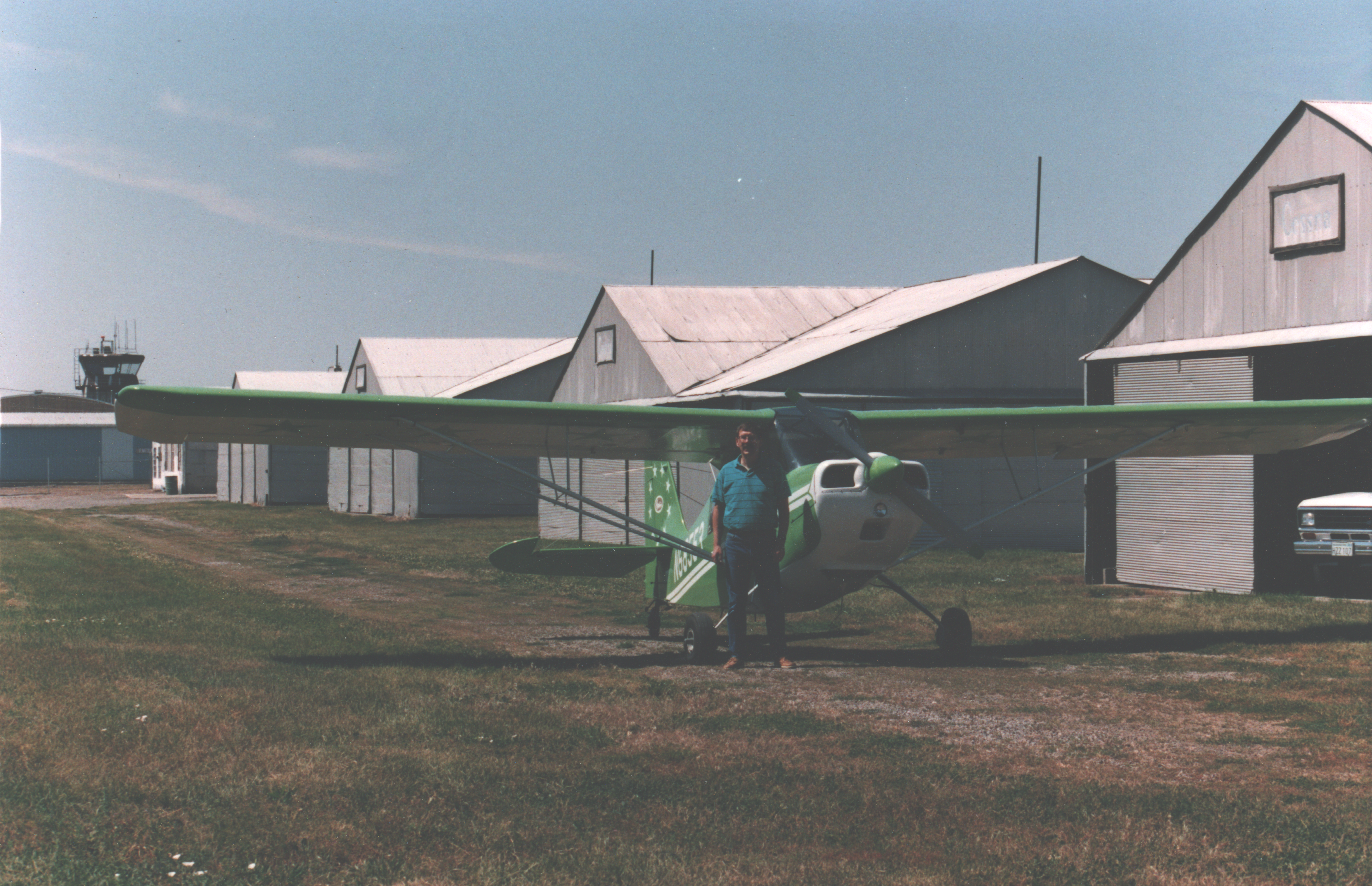
We drove out to Sunset Air Strip where he had the plane in a hanger. It hadn’t been flown for a few months, so the mechanic did a brief inspection, put a new battery in it, fueled it up, and we went for a test flight. Sure enough, it flew much like an Aeronca Champ. He had already told me the history of the plane — in particular, it had always been hangared. Total engine time was only 700 hours (that’s like 30,000 miles for a car), and he had taken excellent care of the plane. I promised I’d honor his condition to always keep it hangared and gave him my cashier’s check.
I needed a ferry permit to fly the plane to Henley because it had not had a formal inspection in over a year. We drove to the Hillsboro Airport, where there is a FAA office, to get it. We had lunch at the restaurant while we were there. There we saw some big-bad-green Citabrias parked outside on the ramp. He had never seen another green one before, but there were three of them there.
The weather was not good, and the only way out for me was through the Columbia Gorge. There was a 500 ft. ceiling (bottom of the first cloud layer above the river) there at the time. The short-term forecast for the gorge was not bad, but I could have been in trouble navigating the Portland area if I had to turn back.
The seller insisted on flying the plane to Henley. I knew he wanted to fly it one last time, and since he had flown for United, he could get a flight back for $25. I had a valid license so it would be legal for us to fly. He also had an instrument rating. We could fly in the clouds if the weather deteriorated. Later I learned the flight was not legal after all. Ferry permits do not authorize passengers, and he was technically a passenger. Oh well…
It was raining with poor visibility when we exited the gorge. I started using visual navigation to keep track of where we were. It was my first opportunity to navigate in marginal conditions. The pilot was also using radio navigation as a backup. I won’t go into the technical details, but I learned a great deal on that flight about flying in bad weather.
We eventually lost contact with our exact location, but we had a good handle on where we were generally. We could have used radio navigation to get to Felts Field — and to Henley from there — but he didn’t want to do that yet. I told him we were close enough to Idaho to see the mountains before we went too far east, and it was a straight shot north to Henley from there.
I spotted Lake Coeur d’Alene in a half hour or so. The terrain was instantly familiar to me. That’s the way visual navigation works. If you loose contact with your exact position nothing looks familiar, but if you find a known feature it all snaps into place. We landed at Henley less than an hour later.
I called Marcia to let her know we had arrived. Then we put my plane in a hanger and had $50 hamburgers while we waited. (So called because that’s about what it costs to fly to a nice airport to have one.) Marcia and Barb met us at the restaurant, and we drove my ferry pilot to the Spokane Airport for his flight home.

 Didit.Live