Marcia and I went camping at Jim Creek — a Navy recreation facility — with Susan (Clark) Johnson, her mother Jane (Marcia’s sister), Dan Johnson, and “the girls” circa 2010. The topic of brain injury in high school football came up. That led to my regaling them with stories of my high school football “career.” It was suggested, and I agreed, that I should blog about that here at Didit.Live. What they really wanted me to do though, was for me to post my Las Vegas story, which I had related earlier.
So here goes…
*******
It was 1953: The Korean War was on. I was working hard to keep my grades up so the draft board would let me stay in college. Everyone needs diversion though, and that was especially true in those days. One of my beer-drinking buddies came up with a colossal one.
He had stumbled across a little book that described a “sure-fire” way to win at Roulette. The logic was convincing. Simply write 1 – 2 – 3 on a slip of paper. Add the outside numbers (1+3 = 4) and bet 4 dimes (the minimum bet was 25 cents in Las Vegas then). If you lose, write 4 at the end of the string. You now have 1 – 2 – 3 – 4 on your slip of paper, so you must bet 1 + 4 = 5 dimes. If you win, cross off the 1 and 5 and you are left with 2 – 3. Your bet now is 5 dimes. Continue with this rule until you cross off all the numbers in your string. You end up
A complete example (using dollars)
Start with 1 – 2 – 3 on your tally sheet
Bet $4 (1+3), lose: Add a 4 to the end, giving 1 – 2 – 3 – 4
Bet $5 (1+4), lose: Add a 5 to the end, giving 1 – 2 – 3 – 4 – 5
Bet $6 (1+5), win: Remove the 1 and 5, leaving 2 – 3 – 4
Bet $6 (2+4), lose: Add a 6 to the end, giving 2 – 3 – 4 – 6
Bet $8 (2+6), lose: Add an 8 to the end, giving 2 – 3 – 4 – 6 – 8
Bet $10 (2+8), win: Remove the 2 and 8, leaving 3 – 4 – 6
Bet $9 (3+6), win: Remove the 3 and 6, leaving 4
Bet $4,(4+0), lose: Add a 4 to the end, giving 4 – 4
Bet $8 (4+4), win: Remove the 4 and 4, which closes the string.
You started with a $4 bet and ended up $8. Double your money — guaranteed! (Supposedly.)
Actual Roulette odds are 47.37% for the player. That’s more generous than in this example, which was only 4 wins out of 9 = 44.44%. Other examples might be 6 wins out of 15 = 40%, 7 out of 20 = 35% and 11 out of 30 = 37%. These examples are not as lucky, but they show you don’t need anything as good as player odds (47.37%) to close those double-your-money strings.
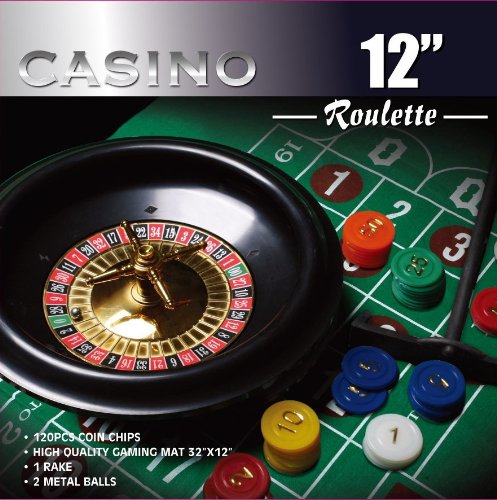 We weren’t sure things were that simple though. So we bought a toy Roulette wheel to test the system. Using it gave us a feel for the timing of the game as well as the actual sequences of wins/losses we needed to judge the outcome. After many hours of testing, we calculated we could each be winning $52 an hour ($5 an hour was big money in those days). Our major concern was what we would do if it worked out. Would we be tempted to stay in Nevada instead of returning to graduate?
All we needed now was a bankroll. We figured $300 (more like $6,000 today) would do it. How were four college kids going to come up with that kind of money? We were only planning a quick test of the system, so it didn’t all need to be our money.
We decided to offer shares in the trial to our fellow students. We offered two tiers: Double your money if we win, half back if we lose; or triple your money if we win, and a third back if we lose. The psychology worked and we soon had the $300.
Gene Bechtel, Joe Kennedy, Manly Draper and I started out for Las Vegas when the Thanksgiving break started. I had a nice 1948 Ford coupe, and we planned to drive it non-stop because we had just a few days until classes started again. Off we went, headed for Route 66, as soon as the last class session was over.
I went to sleep while someone else took the wheel sometime after it got dark. Around midnight, they woke me up. What the heck? They told me it was snowing and a according to the radio a blizzard is on its way. “What are we going to do?” they asked.
We were west of Amarillo, Texas at that point. You do not want to be caught in a blizzard there on the front side of the Rockies. I told them we should head for Amarillo because we could stay ahead of the storm by going east. We might have to stop in Amarillo but we’d be safe. By the time we got there, the snow was thinning out. We decided to go on to Oklahoma City because one of our buddies was in medical school there.
We surprised Lud (Ludwig?) the next morning, spent the day visiting, talked about med school, and then went to a “secret” roadhouse that night (we were in a “dry” county). The beer and food were good, and the music was loud and animated. That’s about all I remember. The next day we were back in McPherson, licking our wounds.
We decided to try again during Christmas break. We made up a cock and bull story about why we wouldn’t be home and off we went again. For reasons I forget, we decided to drive a worn-out 1940 Chevrolet this time. Weather forecasting was pretty rudimentary in those days, but we missed any storms that might have come along. Our trip took about 24 hours non-stop.
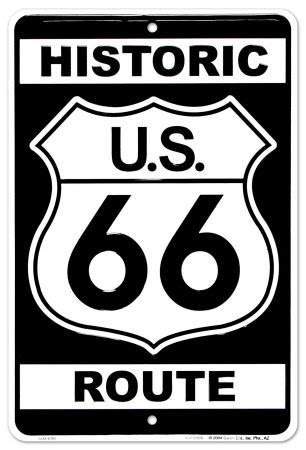 Route 66 was a two-lane highway. The scenery along it was grand but a little monotonous. Small towns along the way were something you looked forward to and marked your progress by. We kept an eye out for Whiting Brothers gas stations too. We worried a little about the “cheap” gas there, but the old Chevy seemed to run fine on it.
Somewhere between Albuquerque and Gallup, we had a startling experience. It was in the middle of the night and pitch black. A pair of headlights ahead on a vehicle ahead tilted sharply and it was suddenly coming straight at us in our lane. A moment later its headlights tilted the other way and it swerved back to its lane. We had slowed down by then, and a Greyhound bus flew by. Up the road, we spotted a donkey standing in the middle of the road. It was all happened so quickly we weren’t shook-up until we thought about it for a minute.
The rest of our drive through the arid landscape was without incident. We were getting hungry by the time we neared Flagstaff when spotted a Smorgasbord at the side of the road. It was the finest spread we’d ever seen. The price was $5 thoughs. That was way too high in our opinion (would be like $50 today). I imagine we had something to eat in Flagstaff.
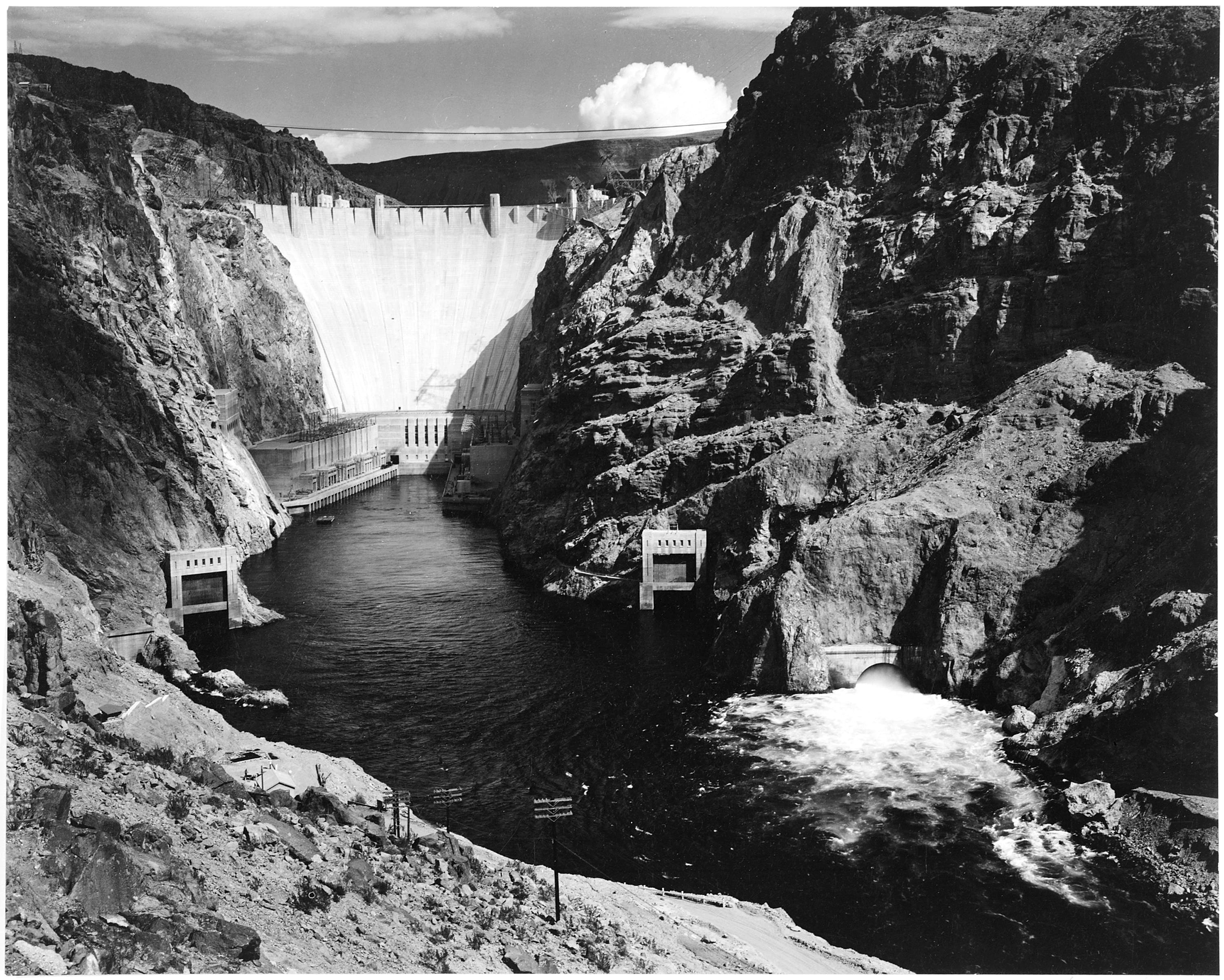 We got off Route 66 at Kingman in the early afternoon and headed for Las Vegas. We were eager to see Bolder [now Hoover] Dam and it did not disappoint. We were even more eager to get to Las Vegas though, so we soon pressed on.
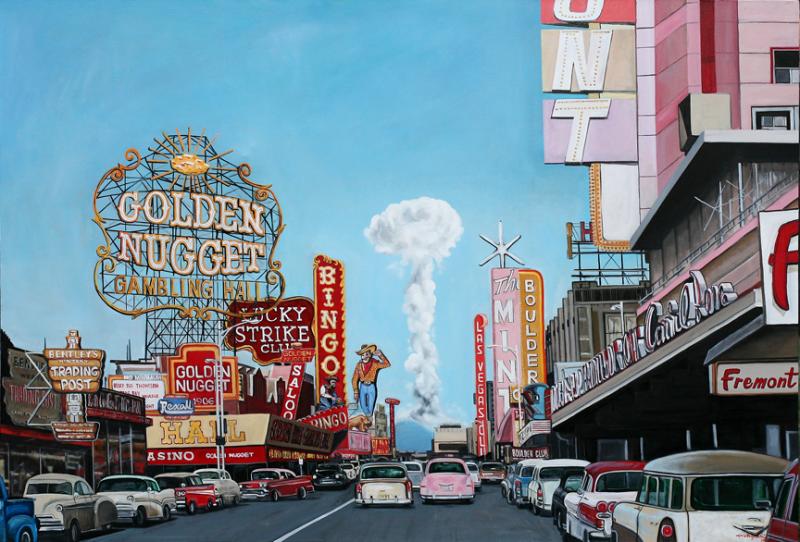
We arrived at the outskirts of LasVegas in an hour or so. We were downtown at the corner of 5th and Fremont less than a minute later (try that today). We found a big old a hotel there, right across from a big (for those days) casino. $3 a night for a room, with shared necessities at the end of the hall. No need for a reservation.
We didn’t tarry long at the hotel. The four of us put on suits and ties (not particularly unusual in those days) and strolled across the street to the casino. Our plan was to work shifts as pairs, but we all wanted to see what was what at first. We walked in a side door and saw the Roulette tables right there. The place seemed empty, but this was a weekday afternoon.
Two of us sat at a table and started gambling. No doubt they knew we were neophytes, but we soon bought some chips and started working our system. One of us handled the chips and the other managed the string numbers. It was going well when a couple of other “gamblers” joined the table. It was obvious they (pit bosses?) showed up to see what we were up to, but there was never any negative feeling.
After an hour we decided to pause and ponder our observations and concerns. It had been a stress-filled 60 minutes. The Casino offered big steak dinners for a dollar so we sat down to eat. We were quite excited by the fact that we won $53. Remember, our estimate was that we’d clear $52 per hour. And there didn’t seem to be any trouble with what we were doing. We were ready for more.
We went back to the tables after dinner to gamble some more. Of course, we had begun to think this isn’t really a gamble. Things went well for a couple of hours and we decided to take our winnings and retire to our hotel. We wanted to be fresh for the next day, and we hoped the stress level would subside. We also decided not to split into shifts yet. After all, this was just a test, not a going operation.
At one point we ran into a string of losses. As I remember, we were down about $80. Our bankroll, including winnings, was about $500 by then. The next bet was $120 or so. We began to fear that there was a fatal flaw in our system. Remember, each string started with a 40 cent bet, with an objective to win 60 cents. No big deal. But risking $120 to win 60 cents seemed a little extreme. But we pushed the required number chips out to the Red square — and won.
We still had a long way to go before we were out of the hole. The size of the bets continued to decrease and we finally closed the string. We decided to take our winnings and go think about things for a while. Keep in mind, this was only one of many closed strings for the session. We cleared about $100 for the session even though we came close to ruining our bankroll on that one string.
We went back to the casino the next day for breakfast and more gambling. We did fine for a while, but then hit a bad spot. We came to a point where we needed to bet $180 or so. Of course, we had been losing a string of larger and larger bets so we ran out of cash. We decided to cash our remaining traveler’s checks. As we left the cashier’s window with our chips one of them said, “Those boys really are gamblers.” In retrospect, we were suckers of course. We were finally able to close out that string though.
You can guess what came next. In an hour or so we were ruined as they used to say. Our bankroll was gone. Now what? Well, we had a wealthy drinking buddy back in town. We gave him a call and explained our system and its temporary demise. We had figured out a way to reduce our initial bets from 40 cents to 25 cents (the minimum bet), so we could assure him we’d come out OK this time. He agreed to wire us the money the next day. Now, all we had to do was wait.
The next morning we went to the Western Union place to collect our cash. Yes, there was a telegram waiting. But it said, “SORRY. HAVE RECONSIDERED. DECIDED BEST FOR ALL NOT TO SEND MONEY.” We realized we were well and truly broke. We didn’t even have money between us to get back to McPherson. Oh, bother. Then Manley admitted he had secreted a $20 bill in his shoe. He figured this was going to happen.
Gas was about 20 cents a gallon back then. At 20 mpg, that’s one cent per mile. We had about 1,200 miles to go, so that was $12 for gas. OK, we could make it. We checked out of our hotel and headed out of town. We stopped at a gas station to fill up and spotted an offer of 5 quarts of reclaimed oil for a dollar. That old Chevy was an oil burner so we got the oil too. We also bought a loaf of bread and a jar of apple butter. Why not peanut butter? I don’t know.
We had an apprehensive feeling all the way back down Route 66. All we could do was push on and hope nothing went wrong. We arrived back in Kansas the next morning, with two or three hours of driving left to go. We had about $5 left so we knew we’d make it. We even splurged on a dozen donuts for breakfast.
Needless to say, our investors (speculators?) were devastated when we got back. And we still had to pay back their residuals. Oh well.
Too bad none of us knew anything about statistical analysis. We could have predicted exactly what would happen. Many years later, I learned that starting with $200,000 capital you could make $80,000 per year using our system. And the good news was you’d only go broke once (on the average) in 20 years. No wonder $300 only lasted 2 days.
*******
Note 1. A few people have been able to overcome the odds of Roulette. Claude Shannon, the father of information theory was one of them (and someone I’m connected to by 2 degrees in a Kevin-Bacon sense — see Note 2 next). [Claude Shannon, the Las Vegas Shark]
Note 2. My dad told me a friend of his knew the man who shot Billy the Kid. Well, I knew Barney Oliver who worked with Claude Shannon. Barney was the head of HP Labs when I worked there. He was a genius and a genuinely nice guy and he also knew all about information theory. [How Information Got Re-Invented]

 Didit.Live
Always a good story!!
LikeLike
Yes, back by popular demand.
LikeLike
Hilarious…I could see a movie out of this weekend. Had your system worked, though, they’d soon have you all banned from every casino in Nevada.
LikeLike