Hobie Cat Racing — Three

The saga continues…

San Francisco Bay

There weren’t as many Hobie Cat owners around the Bay Area as you’d imagine. Most sailboat prospects there already had a conventional sailboat by the time Hobies were introduced.  Remember that Fleet 17 was based in Santa Cruz, where there were better prospects for a beach-oriented sailboat.

The course for one race on The Bay started in Alameda (over by Oakland), circled Treasure Island and went back to Alemada. Aside from seeing San Francisco and the bridges from the water, it was fun to be further offshore than most of our races were. I remember that the wind was strong and I nearly got washed off the boat. But we hung on and did fairly well.

Another race on The Bay followed an epic course up the Sacramento River from Richmond, through San Pablo Bay, up to Rio Vista. It was more than 50 nautical miles (60 miles) long. The beginning of the race was in The Bay of course. The water was very choppy, with lots of big swirls and eddies. I suppose that was from the flow of the tide. After a mile or so, an eddy snapped one of our rudders off. Now, what do we do? Can we even make it back? We decided to try to go on.

Hobies still sail fairly well in certain directions on one rudder. Although it wasn’t easy, we managed to make it through San Pablo Bay to the river channel The direction of the wind with respect to the course was better on that leg, and there were no waves. I found that if I headed off the wind a bit we could pick up enough speed to make the single rudder effective. Then we could turn back to the direction we wanted to go.

It was a constant challenge to balance speed with direction for the next 30 miles. The course turned more northerly at that point, and we had no trouble the rest of the way. We were in about tenth position out of more than 50 boats when we finished at Rio Vista.
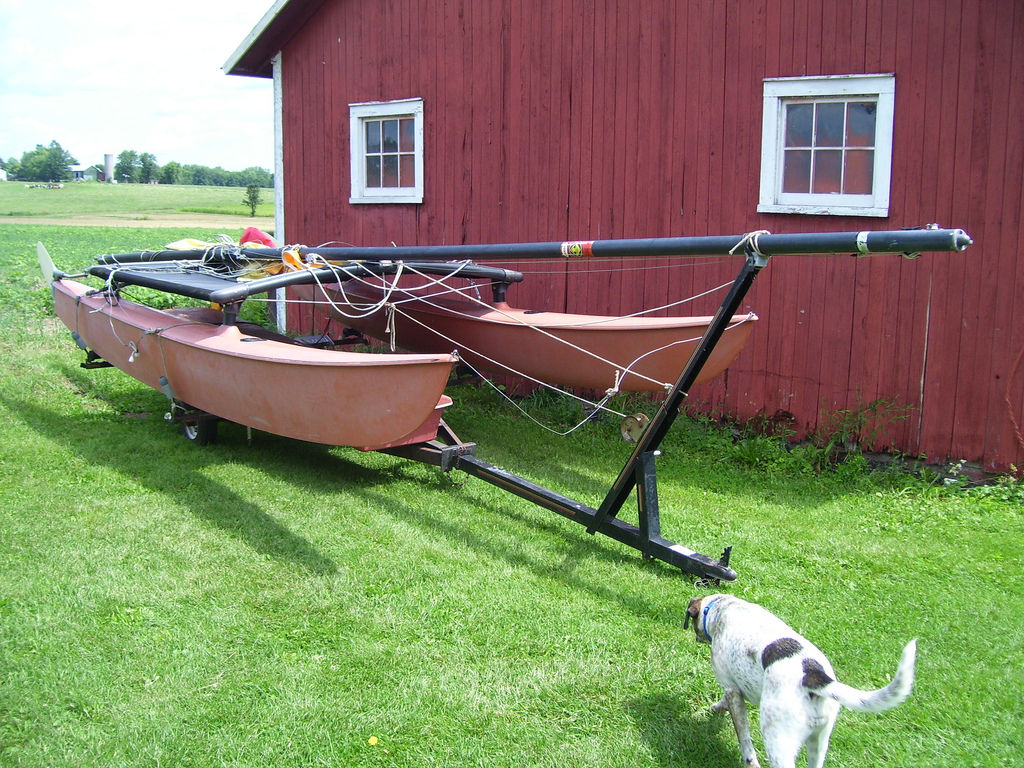
trailerNancy and Mark were there with the venerable ’66 Ford and the all important boat trailer to greet us. We had some fun sailing around in the river, which was about a fifth of a mile wide at that point. There were a few cargo ships going down the river. They blew their horns at us, but we were well out of the way.

Our landing spot was an Air National Guard exercise area, but it was also designated as a park with public access. A stupid helicopter pilot came over where we were and landed, nearly capsizing some of the boats on the beach. It was obviously intentional. I suppose he just had to mark his territory.

Rudiments of sailing
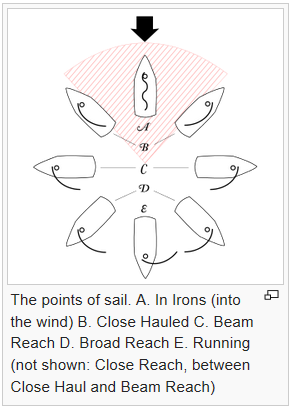
pointsA little sailboat jargon will help you understand the essence of the next story. The diagram shows the points of sail for a sailboat. Point A: the boat is “in irons,” which is a helpless situation. The boat is out of control and will be blown backward.

Point B: “close hauled,” which means sailing as close as possible into the wind. On B you “tack” the boat to change direction by turning the bow through the eye of the wind. If you are on starboard tack (wind coming from the right) you will end up on port tack (wind coming from the left).

Point D or E: you’re sailing downwind and you “gibe” the boat to change direction. You do that by turning the stern through the eye of the wind. Gibing can be dangerous because the boom of the sail travels over the crew as the sail shifts from starboard to port (of vice versa), and the sail and the boom will swing violently if the wind is strong. [points of sail] [tacking and gibing]

San Luis Reservoir

luis
Click to enlarge this satellite view of San Luis Reservior

Everyone had been looking forward to this event. It was the first time we were racing at San Luis Reservoir. The wind was strong when we got there, which promised some excitement for the races. The launch area was near a little bay that offered some protection from the wind and waves. Dan and I rigged the boat and took it out to see how it would go in that wind. The answer: not so good.

Lake wave crests are spaced much closer than ocean waves. They were big and spaced about eight feet from crest to crest on that day. Much shorter than ocean waves are spaced. We met the full force of the wind and the waves when we sailed out of the little bay. We were on a broad reach, and things went well.  We were in trouble when we tried to go back though. The safest way would have been to tack to turn around. We could not get the boat to tack though. The waves pushed the bows back at the critical point of tacking and we ended up “in irons” every time we tried.

OK, maybe we could jibe if we’re careful. I didn’t like turning that way because it was not far to the rock-faced dam, but it might work. We tried jibing a few times but the wind almost overcame the boat every time we tried. There was one more thing we could try. We capsized the boat, forced it to turn turtle, turned it around while the sail was buried in the water, righted it, and sailed back in. (We could have reefed the mainsail, but we did not have anything to lash it to the boom with.)

Some other boats were coming out by the time we got back into the little bay. We decided to watch them and see how they faired. They simply jibed to get back in. The used a bolder way to handle the mainsail than we did though, and while it was a wild turn, they were not overpowered. My conservative approach was all wrong. We went right back out to try it their way. The anticipation was scarier than the turn itself. It all went smoothly, but the boom flip was breathtaking.

We sailed back to the beach after a few more practice gibes, and waited for the first race to begin. But there was to be no racing. The race committee decided it was too dangerous, and many participants didn’t want to race anyway. What a disappointment. I thought we could at least have had one unofficial race. Oh well, I learned something important that day.

Hobie Cat Racing — Two

Hobie Cats are beach boats. There is no centerboard or keel, the rudders kick up in shallow water, etc. You just sail toward the beach, jump off when the rudders kick up, and work with the waves to get it further up the beach. That’s the easy part.

The hard part is getting your Hobie off of the trailer and down to the beach. The two hulls and trampoline (deck) of a Hobie 16 weigh about 300 pounds. You and your crew mate need to round up four other Hobie 16 sailors to help. The six of you hoist your Hobie on your shoulders and carry it down to the beach. It’s not always easy to conscript helpers if you arrive a little late.

Learning to “step” the 26-foot mast is the trickiest part of rigging a Hobie 16. There are seven cables and a couple of halyards to deal with, and you have to keep it balanced while you pivot it up. The mast is not very heavy, but your grip is only about five feet from the base. It only takes about 30 seconds though, once you’ve got it down pat. The rest of setting up a Hobie is easy once you know where everything goes. [video]

In the rest of these segments on Hobie Cat racing, I’m going to relate some of the highlights I remember from the many regattas I sailed in. The next one was an early one.

Folsom

Regatta that is, not Prison. There are three fleets (classes) in Hobie racing: C fleet for beginning, B for intermediate, and A for expert sailors. You progress when you consistently win races in your current class. I was sailing in C fleet this first time at Folsom Reservoir.

There are two reasons this regatta was memorable — light winds and a fabulous dinner. There were about 150 Hobies there, and Dan Popylisen was crewing for me.

A Fleet always starts first, B Fleet starts 5 minutes later, and C Fleet starts 5 minutes after that. Usually, A fleet will finish more than 5 minutes before B, and C will be well behind that. That prevents a tangle of classes at the finish line.

The first day the winds were light and fluky. By the time C fleet started, I could see that A fleet was stuck with no wind, and B fleet was sailing into the same dead spot.

Folsom Frolic: 3rd Place in A-Fleet racing.

Normally you try to take the most direct path around the race course marks. I decided to stay about a half mile away from the glue pot, which made our course about a mile longer. My strategy paid off. We finished about five minutes before the first A fleet boat did! The rest of the boats finished well behind that.

Dinner was a special affair (and never surpassed). The race committee hired a mobile BBQ outfit to cater dinner for about 400 people (skippers, crew, and others). The slow-roasted beef, beans, and such came in a truck with a heated, insulated box. They pulled out what they needed as they served the meal.

I don’t remember how well I raced in the other races that weekend, but I did win a third-place A Fleet trophy a few years later.

Monterey Bay

I was a member of Fleet 17, in Santa Cruz. We sponsored a regatta across the bay in Monterey each year. The beach there is beautiful, and the waves on the beach are usually small. There are fishing and other big boats to contend with out in the bay, but it’s all good.

One year Mark, Nancy, and their friend Mitch Hulich drove down to watch. We were going to meet in Monterey Veteran’s Memorial Park and set up camp. Unfortunately the campground was completely filled by a big motorcycle rally. It’s a long story, but we didn’t connect the first night because of the confusion. They slept in the car down at Fisherman’s wharf, and I don’t remember what Dan and I did. We found them the next morning and decided to figure out later what to do about sleeping that night. We tried another campground that night, but it was full too. The ranger suggested we drive down the Big Sur Highway and find a place on the side of the road.

So we got back in our cars and headed south. I finally spotted a good spot where there was sort of a hedge along the road. We decided to put our gear over the hedge, and then park the cars further on down the road to obfuscate the actual location of our campsite. In the morning we carried our gear down to the cars. I had my tent in my old Army duffel bag. As I was loading it in the trunk an incoherent denizen came up from under the bridge. He spotted my duffel bag and mumbled something. I finally figured out that he wanted me to know that he had been in the Army too. Must have been Vietnam. I didn’t know whether to engage with him further or be very afraid. We left quickly and drove back to Monterey for another day of racing

Santa Cruz

Of course, Fleet 17 sponsored several regattas in Santa Cruz each year. It’s a great place for Hobie Cats. There’s a good breeze flowing most of the time, and there are often nice waves rolling by offshore. By “nice” I mean five foot crests about 40 – 50 feet apart.

I know it doesn’t look that way, but water doesn’t flow along with waves (except for breaking waves). The water just oscillates up and down with each crest. If you handle things right you can slide down the front of a crest and then turn parallel to the waves when you reach the bottom. That way you get a little boost from each wave.

That all works well unless you catch up with the wave ahead and bury the bows in the back of it. If you do you will pitch-pole, which means the Hobie suddenly upends and lands upside-down in the water. You are left floating somewhere nearby. You don’t win many races that way.

I remember one race at Santa Cruz in particular. At the start of the race, the wind was about 20 knots. As it progressed, the wind came up to 30 knots or so. Dan and I were handling it nicely, but it seemed everyone else had capsized or were sailing too cautiously. We were a quarter mile ahead of everyone by the time we rounded the leeward mark and headed for the finish line. The wind was getting stronger too, and we were enjoying the ride.

Then we heard three gunshots from the race committee boat. What the heck? That’s the signal to abandon the race. Why? When I looked around, the spume from the waves nearly hid the harbor. Looking up there was blue sky, but it was like a fog looking horizontally. That race would have been our best win ever, but all we could do was mope back to the beach. What a disappointment.

We did not get to race at all on another memorable day. There were huge waves rolling by. They were so big that they broke in deep water about a mile offshore first. Then the remains rolled over the beach. The breaks were about 15 feet high as they reached the beach. Two impulsive guys decided to go out anyway. Of course they hit a breaking wave on the way out. It pushed the Hobie’s hulls completely vertical. It looked like it was going to go over backward. But the wave kicked the stern up as it passed, and they made it out beyond the break.

They sailed around on the big waves outside the break with no trouble, but they didn’t fare so well when they came back in. There was a way to come back in that I thought they would try. There was just enough room tuck in safely behind the harbor breakwater.

But no, they came straight in toward the beach. The next breaking wave tossed them up on the beach. Their Hobie was wrecked, and they were pretty badly banged up. The rest of us realized we shouldn’t feel bad about not racing that day.

Hobie Cat Racing — One

square2Sailing ships seem to always suggest adventure. I believe Mobi Dick — another NW room gem — was the first book I read about the sea. It was not an easy read. I did not realize the theme of the book was revenge, but I liked the adventure.

My early dreams about sailing imagined “learning the ropes,” and “manning the helm.” I would have loved to know what it felt like to skipper a square-rigger like that.

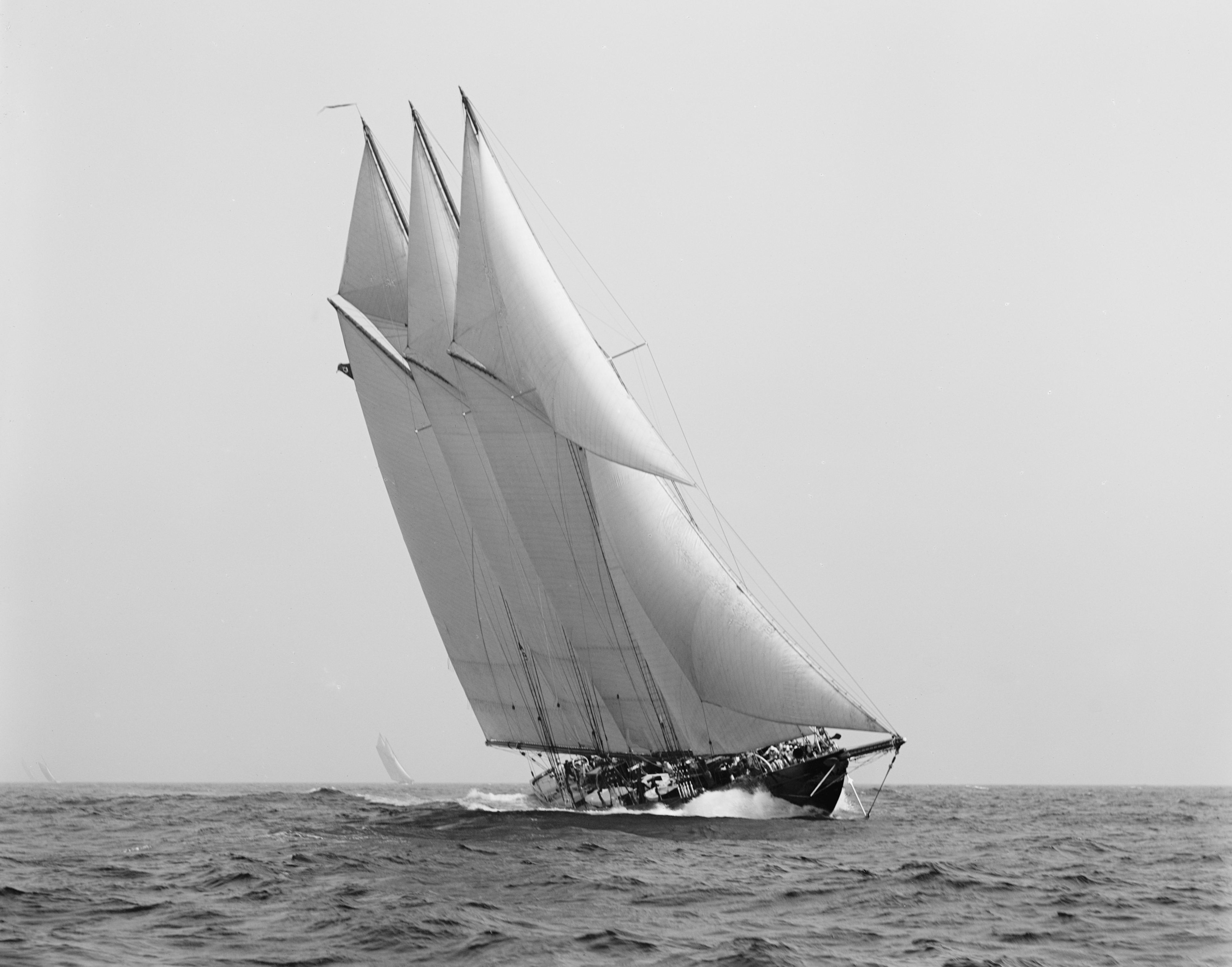
Schooner_AtlanticSquare riggers are not as exciting as schooners though. Schooners are more practical too. I’ve read many exciting tales about battling the sea in them. I might have dreamed of a yacht like that if price were no object.

I first noticed ads about Hobie Cats in the sailing magazines I was reading. (Magazines like that served as the internet back in the day.) Hobie Cats seemed like they were built for adventure. I felt an uncontrollable urge to try my hand in one.

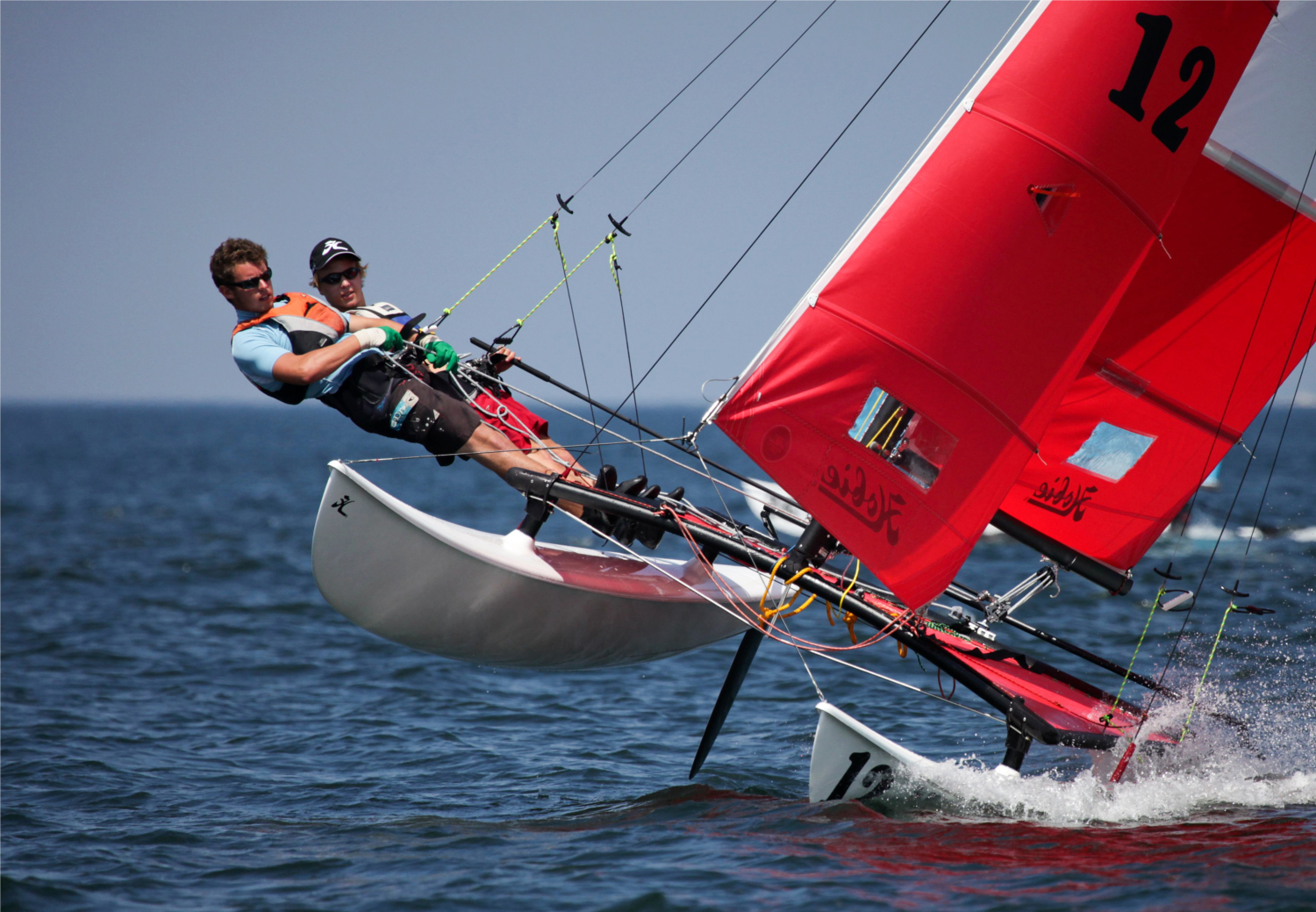
Hobie16Hobie Cats were created by Hobie Alter in the 1960s. He was a surfboard builder who wanted to try surfing a boat. The first one was the Hobie 14, with a single sail. The Hobie 16 went on the market in 1969. I bought mine in 1970.

The picture shows both crew members suspended by a “trapeze” cable. That is so they can get their weight as far to windward as possible. That’s required for them to be able to set the sails for maximum power without capsizing. The record speed for Hobie 16s is 24 knots (about 28 mph).

The hull speed of a conventional boat that is 16 feet long is a little over 5 knots. It is 17 knots for a boat that is 160 feet long. The Hobie 16 easily exceeds 20 knots. In other words, a Hobie 16 could sail circles around your 160-foot yacht. The secret is the long narrow hulls of Hobies.

All that speed in a highly maneuverable sailboat should lead to exciting racing that challenges your sailing skills. Hobies don’t disappoint. You and your crew mate must continually make fast, precise moves if you hope to win. Strategy, and knowing how to use the rules to your advantage are important too.

You really have to see a Hobie Cat race — preferably as a crew member — to appreciate what it’s like. I’ve picked out a couple of videos from YouTube to give you some idea of that. The first one shows a good race in 20-knot winds. (Click the “YouTube” button in the lower-right corner of the video if you have trouble seeing it here.)

The second one is a trial run at the 2014 World Championship in 30-knot winds. It shows how wild things can get. I don’t see how they could win an actual race though. They simply don’t know how to right a Hobie Cat after a capsize in high wind. They also manage to get their Hobie to turn turtle (go completely upside down), but they recover from that pretty well.

Touring the Rockies — Five

Sunday & Monday

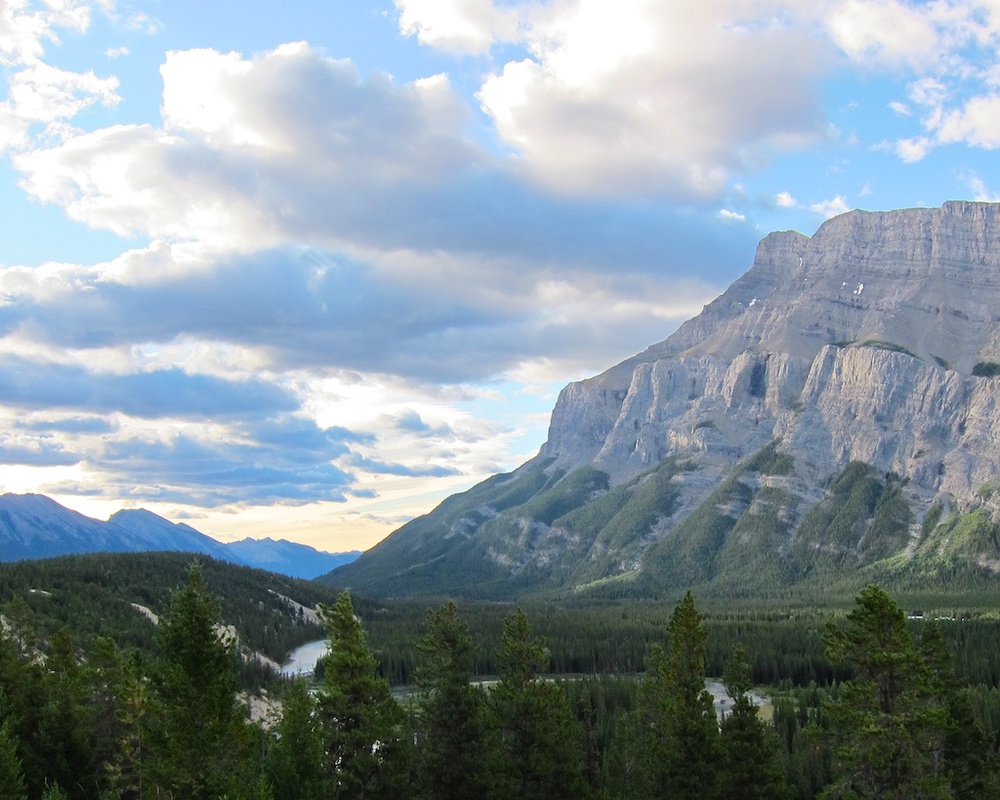
tunnelThe ride from Marble Creek Campground to Banff was short and mostly downhill. Banff (named after Banffshire in Scotland) is a tidy place. It was smaller than I expected. Of course it caters to tourists — something like a blend of Carmel and Santa Cruz. The scenery is a bit more spectacular though.

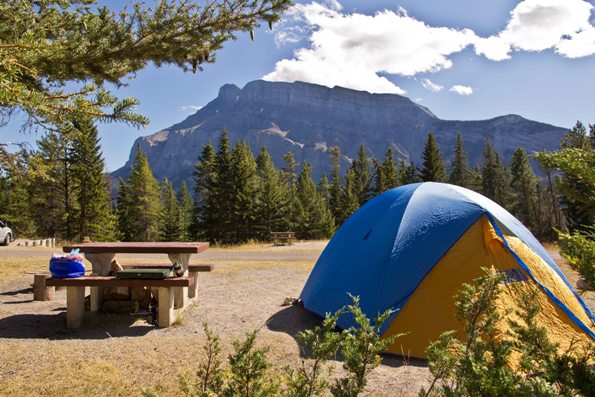
campWe rode through town and on up to the Tunnel Mountain Campground. It’s a big place — probably the biggest campground in Canada. There are places for trailers, motor homes, tents, and groups like ours. Some of us rode back to stroll around town after setting up camp.

I went to Coyotes Southwestern Grill, recommended by the bicycle shop, with a couple of my friends. Seemed like a cross between a cowboy cafe and a hippie deli to me. They bill themselves as Southern, Mediterranean and Mexican though. They have wonderful food there. I ate there the rest of the time we were in Banff. Cornbread pizza topped with smoked chicken, and a nice lentil soup are examples of the fare I chose.

We also explored Banff and nearby spots. Downtown Banff is compact and rectangular rather that strung out along a main street like so many towns are. Some of us attended a nice presentation on the history of the Banff region.

hotelThe Bow River, which adds some elegance, runs right alongside Banff. We crossed it to ride up to Banff Springs Hotel. It was built as a “railroad hotel” to entice travel by Europeans and wealthy Easterners.
The hotel has a castle motif and a tony shopping district of its own, which takes up most of the first floor. We just strolled on through it.

Tuesday

louiseWe left late for the short ride up to Lake Louise. We rode on the Trans-Canada Highway.  It seemed fairly safe, but there were *tons* of motor homes.

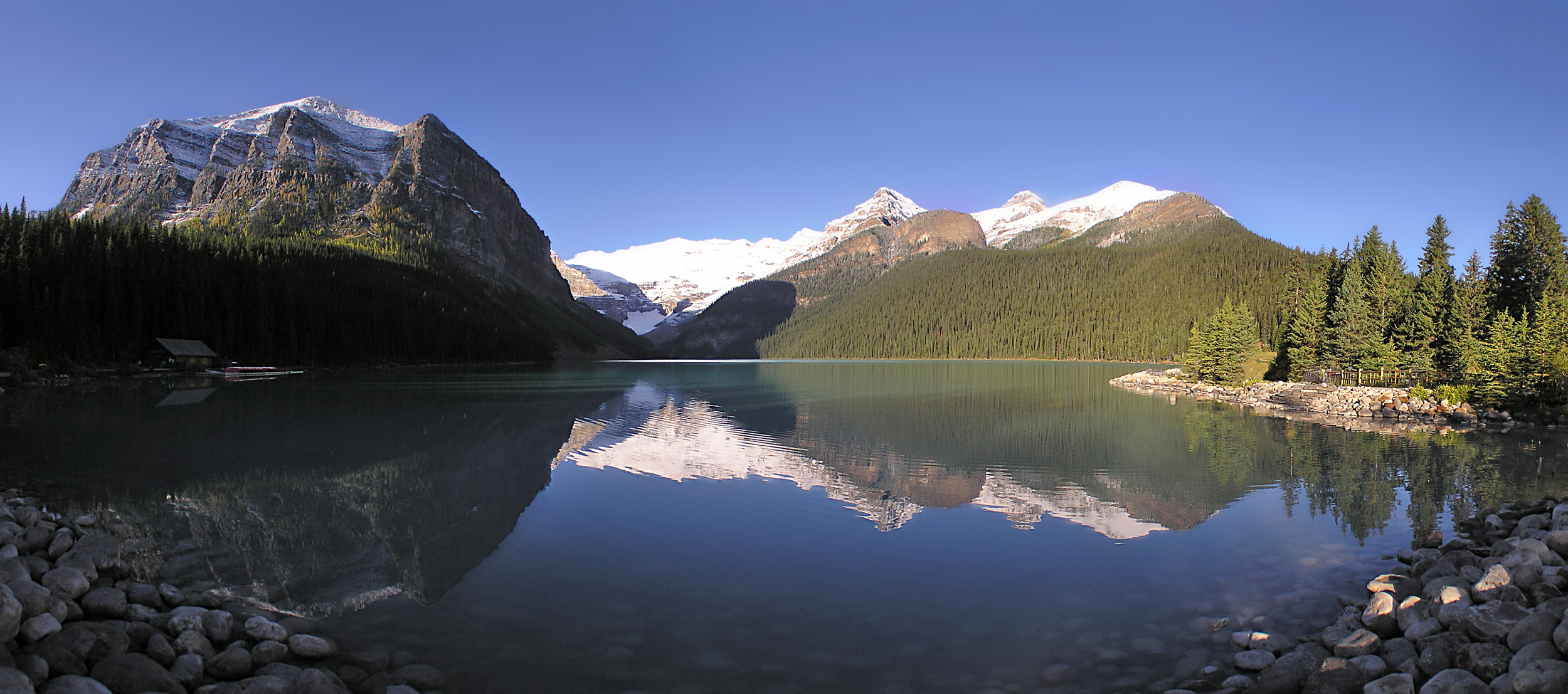
chateauThe lake sits in a glacial basin, and has a green cast from glacial silt. We were on our own on Wednesday until dinner, so I rode up to the lake. I walked on a nice path to the head of the lake, and came back to Chateau Lake Louise, another railroad hotel, to people watch.

Pretty soon a bagpipe band came marching along. I understood they were the National Bagpipers. Probably there for a genuine “Highlands” experience. They were a sharp looking group, kilts and all.

Wednesday

Now we’re getting into glacier country. We’re on the Icelands Parkway (Duh!). The glaciers are mere remnants of their ice age ancestors. Most of them end at the edge of a cliff. The original flow channels are easy to see.

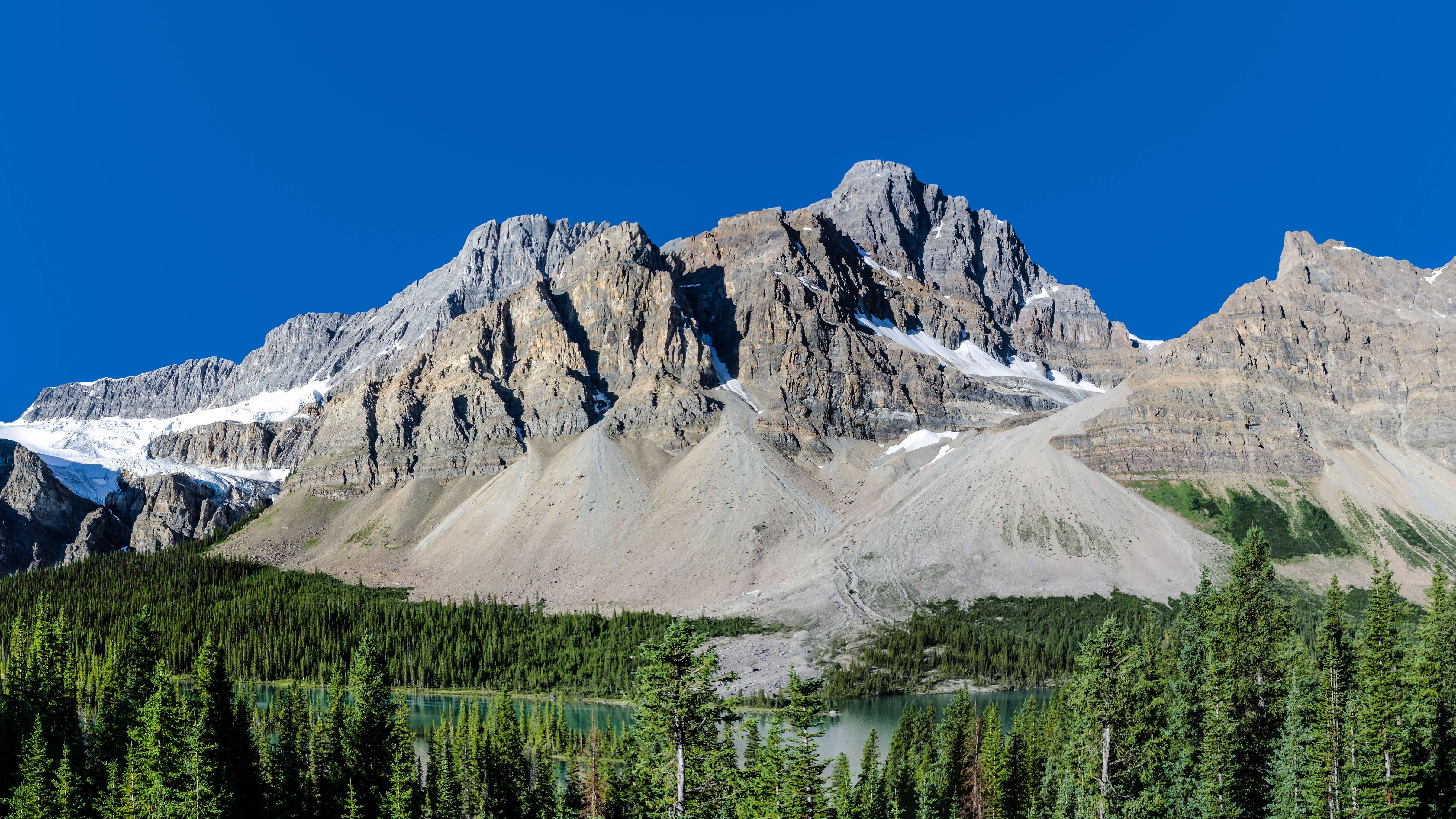
Bow Lake beim Icefields ParkwayWe saw Bow Lake along the way. It’s the origin of the Bow River. Bow Lake is ten times the size of Lake Louise. With its mountains and glaciers, it is much prettier. It’s not as famous though. The iconic Lake Louise gets its fame from its chateau.

Mike, one of my to riding buddies, wore a hole in his tire along the way. I gave him the “boot” I had made for just such an eventuality. We slipped it inside his tire, patched his tube, and were soon on our way again. We had two great downhill runs down from Bow Pass. I hit 42.5 mph on the first one.

Thursday

iceToday was a big day (in many senses). We rode from Rampart Creek Campground to Honeymoon Lake Campground. The big climb was up Sunwapta Pass to Columbia Icefield.

A big hairpin curve at one point reveals a long grade going up the side of a mountain. Evidently that spooked several of the riders. There is a lodge at the top of the pass, and I heard them complaining about how bad the “hill” was. It hadn’t seemed unusual to me. I was probably “in the zone.” When I asked, “What hill was that?” they were a little irritated with me.

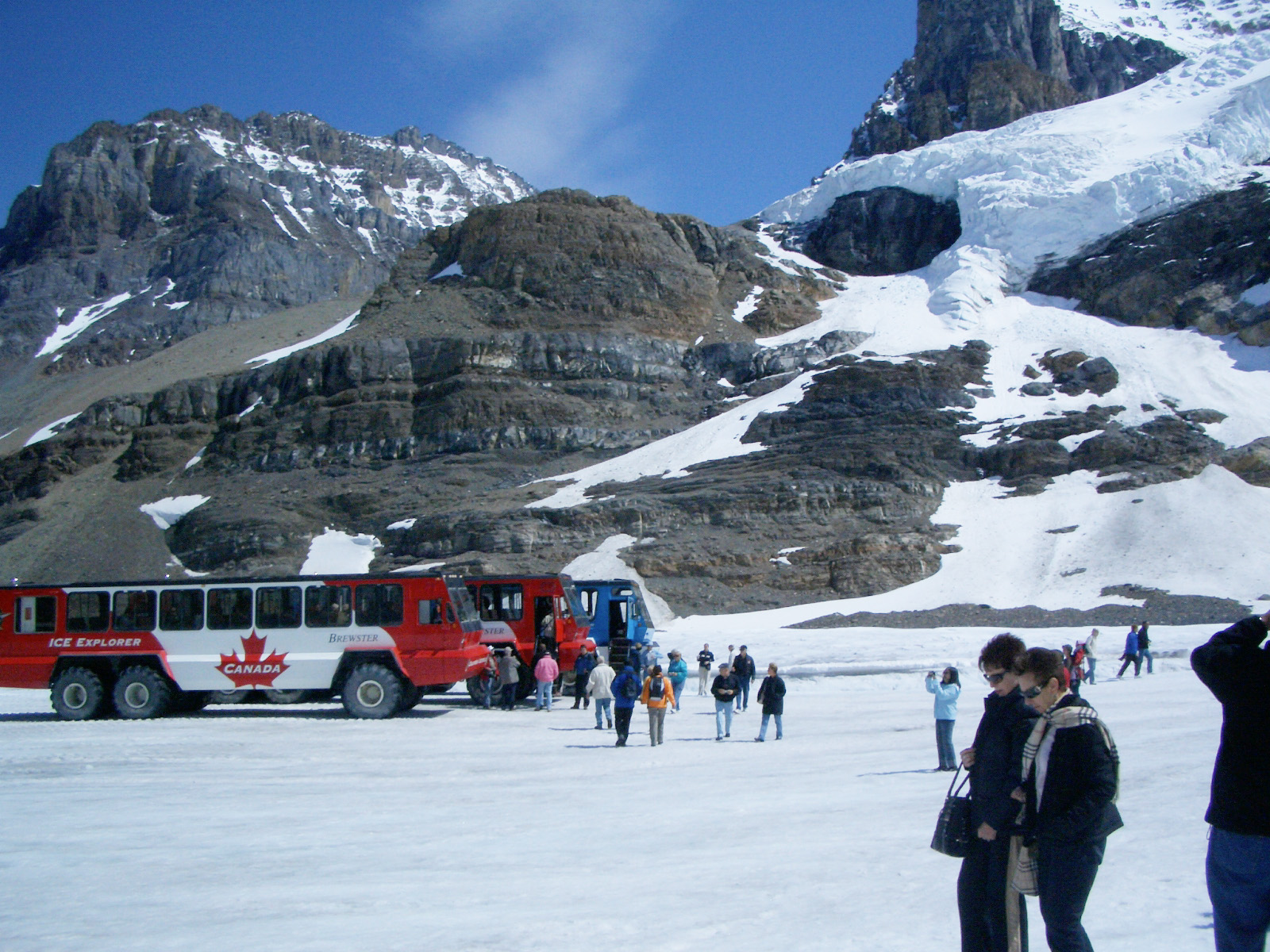
We went out on Athabaska Glaciars in snow coaches. It flows from Columbia Icefield, which is (was?) about 30 miles in diameter. We walked around on the glacier for a while, and then headed downhill.

The downhill leg was a treat. We coasted at 15 to 20 mph for about 20 miles. We stopped at a restaurant, and had a big hamburger. Then we went on to camp, arriving at 8:00.

Friday

More downhill.  A bear came out of the woods halfway down a steep stretch. I considered swinging over to the other lane for a second or two, but decided to stop. I was about 100 feet away from the bear.

Because there was no cub, I didn’t think there was any reason for concern. My riding buddies were 100 feet behind me, laughing at my quandary. Just then twin cubs popped out of the woods. Oh, oh.

The cubs came up to mother bear, and she looked up and down the road. Maybe she was checking for cars. Anyway, they all rambled across the road, and we continued down the hill. Unfortunately I couldn’t dig my camera out fast enough to get a picture.

My buddies and I arrived at the Jasper campground an hour or two before the rest of the pack. We went ahead to get a site before they were all gone. We were there in plenty of time (we thought). When we got to the site itself, somebody was already there.  Well, we got that kerfuffle straightened out, and then rode into town to check it out.

Saturday

We had a nice Chinese dinner last night, sitting around a big round table. We had French toast this morning. Then we split up the group’s reserve funds, gave one camp stove to our leader, and the other one to Dennis, who had always done the morning chores.

Everyone sort of faded away after that, with no big goodbyes. I rode to town to get a rental car to drive to Calgary. I was flying from there to Spokane. I stopped at Coyotes in Banff on the way for huevos rancheros, and then reluctantly returned to civilization.