1. AK, BC & YT — Starting off

I’m looking forward to writing this series of posts. They are about a true adventure. I could write it from memory, but my crinkly old journal will be helpful. I’m looking forward to reliving the journey.

*******

This tour was partly inspired by Bob Broughton’s British Columbia/Alaska Cycle Touring Frequently Asked Questions on the Internet. I found his website when planning my BC Tour the year before, and it gave me an urge to go further north this time. Some of his answers are amusing.
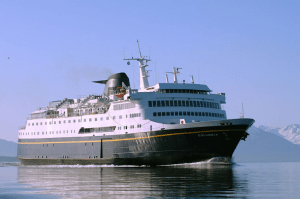
Alaska Marine Highway Ferry

My journey started on a venerable old ferry boat. It travels the Alaska Marine Highway from Bellingham, Washington to Skagway, Alaska. I had planned to ride over the mountains to Bellingham. But Charlie Clark offered to come over from Seattle and take me and my bike to Bellingham. Jane came over too. She and Marcia rented a cabin in Crosby, Minnesota for a month.
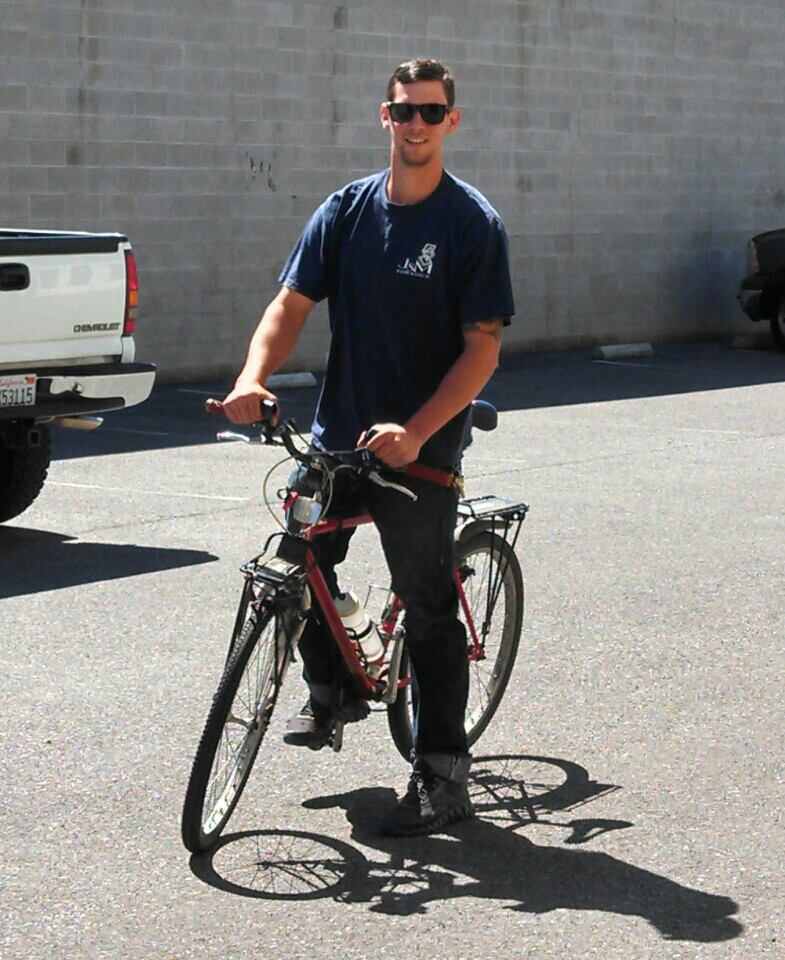
Chris on the mountain bike I rode in BC, YT and AK. It’s his now.

I had a mountain bike, rigged for touring, instead of my touring bike. Bob’s description of the Top of the World Highway prompted that decision: “It is unpaved, often soft, and when wet becomes impassable. It is also very hilly. Bad road!” ~Bob Broughton

The mountain bike would cost about 1 mph in average speed, but it turned out to be a good choice. Not because of that road, but on another road that we’ll get to later…

Charlie took me up to Susan’s house in Everett. I stayed there a couple of days and did some “shakedown” rides around Everett and down to Mukilteo. I discovered I had forgotten my water bottles, but there were no other problems. I found a bike shop and bought the three I needed.

The owner of the ostensively-named Mukilteo Mountain Bike Company had cycled in Alaska and Yukon too. He warned me about mosquitoes, but it turned out to be an unusually dry summer, and I had very little trouble from them. Less rain as I expected was nice too. Lucky me.

Charlie came back to Susan’s and took me up to Bellingham to meet the ferry. We got there about 2:00 in the afternoon. Pedestrians get to go on the ferry before vehicles load. Bicycles were included, and a fellow I met was rolling his long sea kyack on board too. I surmised from his appearance that he was an Alaskan native returning home. It turned out he was from Phoenix. He was going to spend a few weeks on a few of the thousands of islands in lower Alaska.

The first thing I did after tying my bike to a bulkhead was set up my tent. I had learned that many people like me do that instead of booking a cabin. You may be wondering how do you set up a tent on a steel deck. It’s easy. Fasten the tent ropes to the deck with duct tape. Then I brought some of my gear up from the vehicle deck and settled into my new home in tent city.

The ferry sailed along at about 17 knots (20 mph), so it’s not much faster than a bicycle. But it travels 24 hours a day vs, say, 8 hours at 10 mph on a bike (considering hills, eating, etc.). The ferry goes six times as far in a day as a bicycle tourist. It’s a little over 1,200 miles through the Inside Passage to Alaska. The ferry gets there in about three days. It would take 15 to 20 days on a bike (if there was a road). 😀

A ferry is not a cruise ship. There’s no swimming pool, spa, dance floor, captain’s table, or seafood smorgasbord. This ferry had a nice restaurant and hot showers though. Also an elegant observation deck up at the bow. We also had a lifeboat demonstration, and a crewman showed me the navigation equipment.

The scenery keeps changing, but you can only soak up so much of that. There were half a dozen stops along the way. Most of them are little villages clinging to the side of a mountain. We stopped in Ketchikan for three hours. Jane and Charlie spent a couple of years with the Coast Guard there. I knew it was a dark, damp, dreary place. It was drizzling when we got there.

I got off the ferry and walked all the way through Ketchikan. There is only one street in Ketchikan, outside of the main business district, which is a couple of blocks in size. There are fishing boats, seaplanes, and eagles all along the seaward side of the street. Everybody looked at me because they knew I was not from there.

A strong wind had come up after I got back to the ferry. Some kind tent city souls came to tell me that my tent was about to be blown over the side. When I got there it was rolled into a ball but the duct tape still held. I got inside and held it down but quite a bit of rain came in anyway. I managed to keep some things dry, but my journal got soaked. My journal was one of the things that got wet, and of course it is now crinkley.

We arrived at Skagway late in the afternoon. I was planning to find a campground there for the first night. But I met two cyclists who were traveling to a race up there. They asked if I was going to start riding that evening. After a little reflection, I decided why not? Skagway is far enough north to have daylight for about 20 hours at that time of year.

The top of Chilkoot Pass

The coastal mountain range of Alaska rises right from the sea at Skagway.  Much like a Klondike gold seeker, I had to get up on the plateau that the mountains are carved from before I could continue to Dawson City. Klondike prospectors had to haul 2,000 pounds of food and supplies up there. Otherwise, the Mounties would not let them go on.

I only had to haul about 60 pounds, including my bicycle, up there. It was 3,280 feet to the summit. The grade on the climb is about 8% — about all I could handle. It took me two hours. That’s the hardest climb I ever made, and I did it without stopping. The narrow-gauge train on its track off to the right beat me to the top, though.

After prospectors got to the top, a string of lakes took them to where the Yukon River was navigable. All they had to do was build or hire a boat or raft, and they were on their way to the Klondike. Simple. All I had to do was pedal my bike. Simple and much easier.

Riding up to that pass helped me overcome my vague unease with my journey through that empty country. My outlook changed after a few days on the road. The landscape became inviting instead of a dark unknown. My tent felt like home by the middle of the tour.

I wanted to cross the border to BC before looking for a place to camp. I wasn’t sure I’d make it in time, and when I got there the station seemed to be closed. I knocked on the door anyway, and the agent came out. She said they never close in the summer. Great, I was on my way again, and now it was downhill all the way to Dawson City.

The sun had set some time before, but I still had good daylight for riding. I started looking for a place to camp after an hour or so. I saw nothing but small lakes and rough swampy ground along the road, though. I kept on riding for an hour or two and it was getting dark. There were no cars on the road, so it was still safe to ride, but I needed to find a camping spot soon.

A sandy area in some trees appeared suddenly as I went around a curve. The sand was deposited by a creek that surges over that spot during the spring melt. Perfect. I ate some of my snacks and was in my tent before midnight.

The Yukon River takes a surprising route to the ocean. Its headwaters are only about 10 miles from Skagway. It flows 500 miles north to Dawson City, veers right and flows another 1,500 miles to the Bering Sea. Talk about going the long way.

Many prospectors went up the Yukon on a sternwheeler instead of going over the Chilkoot or White Pass trails to get to the gold fields. Eventually, sternwheelers went all the way up to Whitehorse. They continued to be used until the 1950s. I’d be seeing one the next day…

This post has been revised a bit to conform more closely with my journal instead of my memory. 😉
Running leads to Cycling

I’m ready to write about my bicycle tour of Alaska, British Columbia, and Yukon Territory. But first, I’ll write a couple of posts about why I started cycling in the first place.

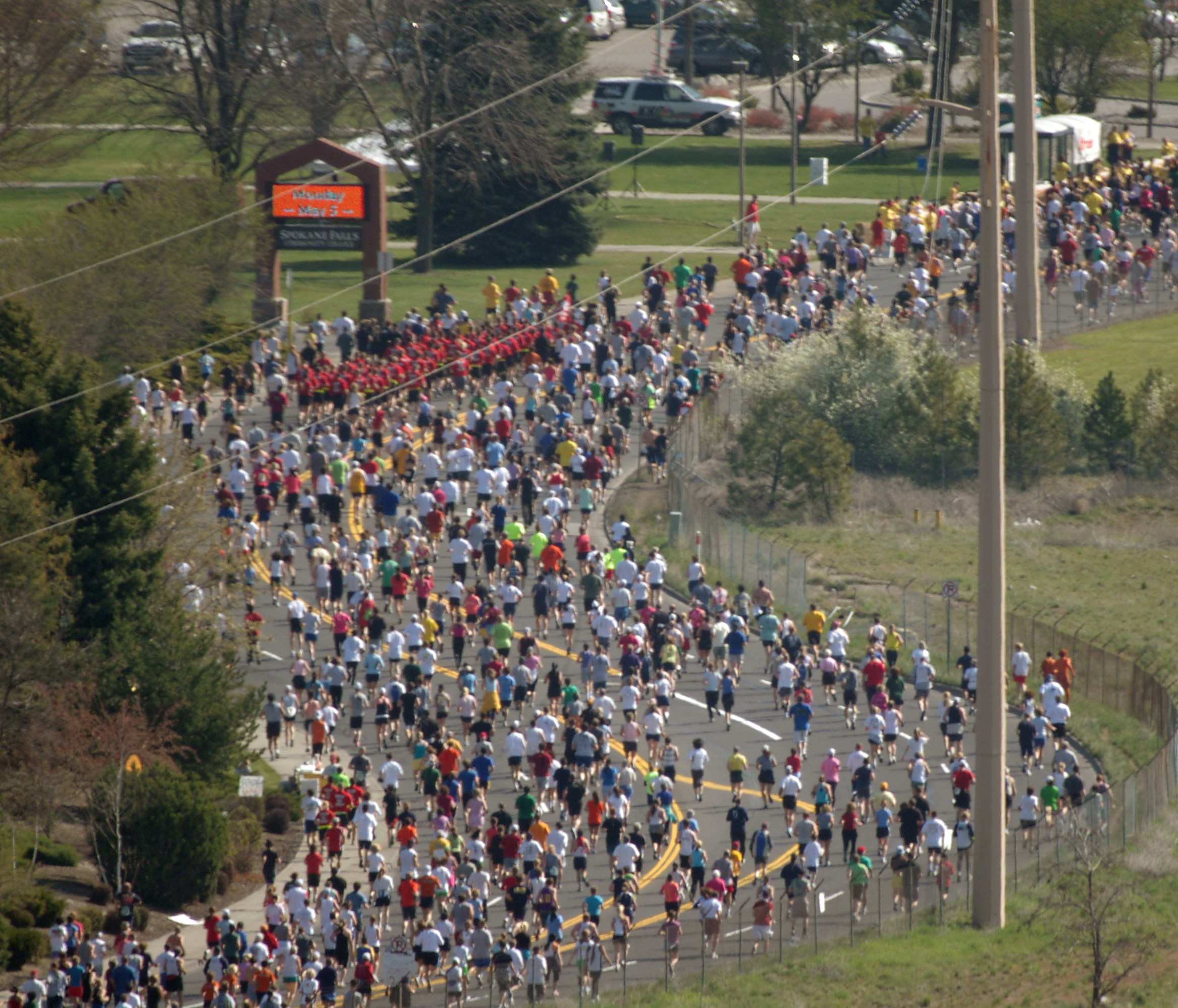
Update: I forgot that I had already written about my discovery of bicycle touring in one of my old posts — Accidental Bicycle Tourist — so I’ll jump right into Touring AK, BC, and YT next. And I found a picture of the start of the Bloomsday race.

*****************************************

I never was much of a runner. One time in high school, everyone tried to run a mile as part of some experiential event. I barely made it. When I went to college, everyone had to run two miles in less than 13 minutes to pass the physical education class. And it was a required course.

James Craig — my college friend from Nigeria — and I were the slowest runners in the class. We worked the entire semester trying to get under 13 minutes. We both made it, but not by much. We got no coaching whatsoever on how to run, even though the professor was the assistant athletics coach. He expected us to just get out there and do it. (These days there are tons of excellent information on the internet, but it hadn’t even been imagined yet then.)

I started running again 20 years later. I wanted to get in better shape for backpacking and build stamina in case I had a problem while racing my Hobie Cat out in the ocean. I decided I’d run two miles around the middle-school track in the mornings.

I read a bit about how to run before I started. I learned it would be a good idea to run with a forefoot strike instead of a heel strike. I tried that and got terrible cramps in my calves after a lap or so. It took me a few months to train my calves to relax during the time my feet were off the ground. I found I could not concentrate on both of them at the same time, so I started with one leg and then trained the other. I used a forefoot strike from then on.

Then we moved to Spokane. That was an adventure in an ice-storm, but I digress. The ice melted off the road a few days after we moved to our new house in Veradale and I went out to pick up running again. It all went well until I came back up the hill up to our house. About half way up, I had to stop running to keep from heaving.

Yes, running up hills is quite different from running on the flat. I decided my goal was to work up to the point where I could run all the way up that hill. That took a month or two. I was still as slow as ever on the flats, but nobody ever passed me on a good hill after that. What’s the saying? What doesn’t kill you makes you stronger?

I learned there were all kinds of organized, five-mile “fun runs” in Spokane. I began working from two-mile runs up to five. Much to my surprise, I found it became easier to run five miles than it had been to run two. I ran dozens of those runs, and have tee-shirts to prove it.

Two miles in 13 minutes is 6.5 minutes per mile on a flat track. Tough for me as a 20-year-old college kid. I was able to run five miles in Spokane in under 40 minutes (sub-8-minute miles) with a few hills thrown in to boot. Not bad for a 50-year-old slowpoke.

Spokane also has an annual Lilac Bloomsday Run. It is 12 kilometers (7.5 miles) and is the largest timed road race in the world. There have been over 40,000 runners in each run since 1986. (Most of the winners are from Kenya.) I have the tee-shirts to show I ran Bloomsday eight or so times.

There’s a hill called “Doomsday” near the finish of Bloomsday. I guess it is a daunting sight for many runners. It was no problem at all for me to run up it. The hills around our house are much more formidable than that little jaunt.

It gets cold in Spokane in the winter (not so much any more). People say you will get frostbitten lungs if you run when it is below -10 degrees. That’s not true. Oh, you need to dress warm and start off slow, but you can work up a sweat running at that temperature. I usually ran before lunch when it was that cold. People at work thought I was crazy, and I did have rosy cheeks when I got back.

My second running career came to an abrupt end after 15 years or so. I read a little book about the damage that running can do to your body, and that alarmed me. I had already experienced sciatic nerve ache and stress fracture symptoms in my foot. The scary part in the book was what running can do to joints and spines. I went out the next day and bought a bicycle. No more running for me.

Grass Landing Strips

Not long after I met Dave Cook, I was summarily kicked out of the main hanger at Henley Aerodrome. Gary Norton, Wayne Norton’s [mentioned earlier] brother, was converting Henley into a theme park named Silverwood. His aircraft museum was a big part of that conversion. He had acquired millions of dollars worth of vintage airplanes and wanted to display them in his big hangar. Mine had to go.

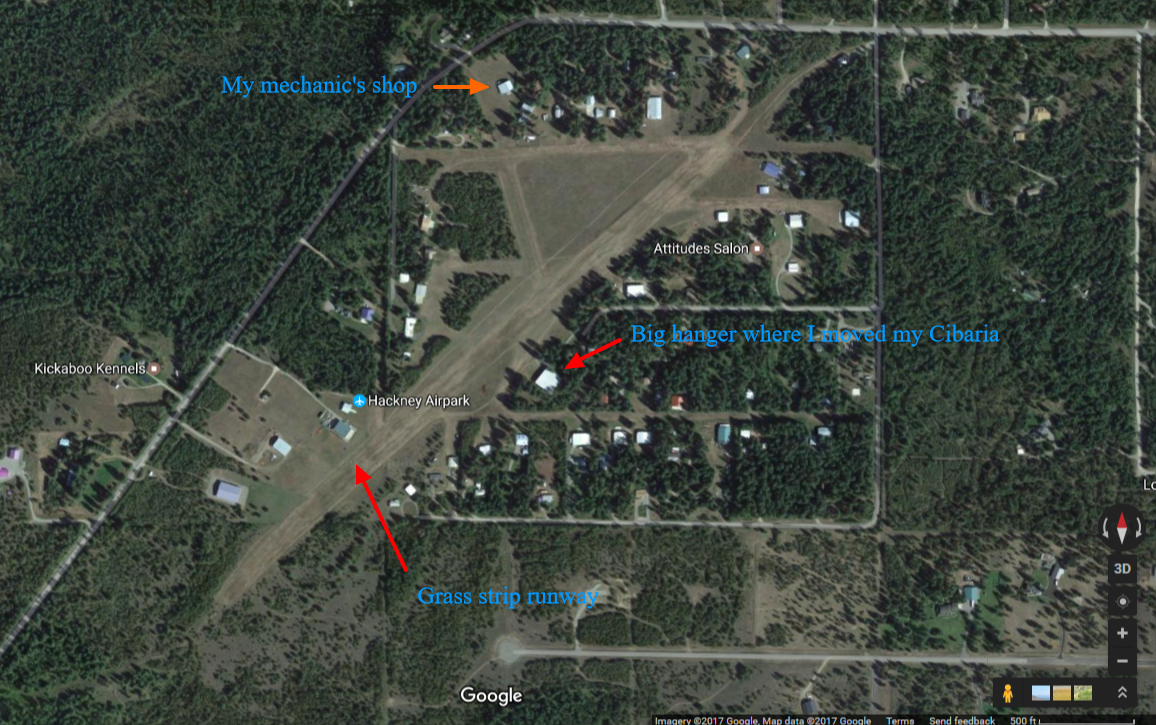
I moved my Citabria over to Hackney Airpark, which was three miles away. “Airpark” implies a place for pilots who want to live where their airplane is. The legendary Steve Wolf lived there and had a workshop there too. It’s where I first saw Sampson in skeleton form. Jerry Cooper, my aircraft mechanic, had his maintenance shop there too.

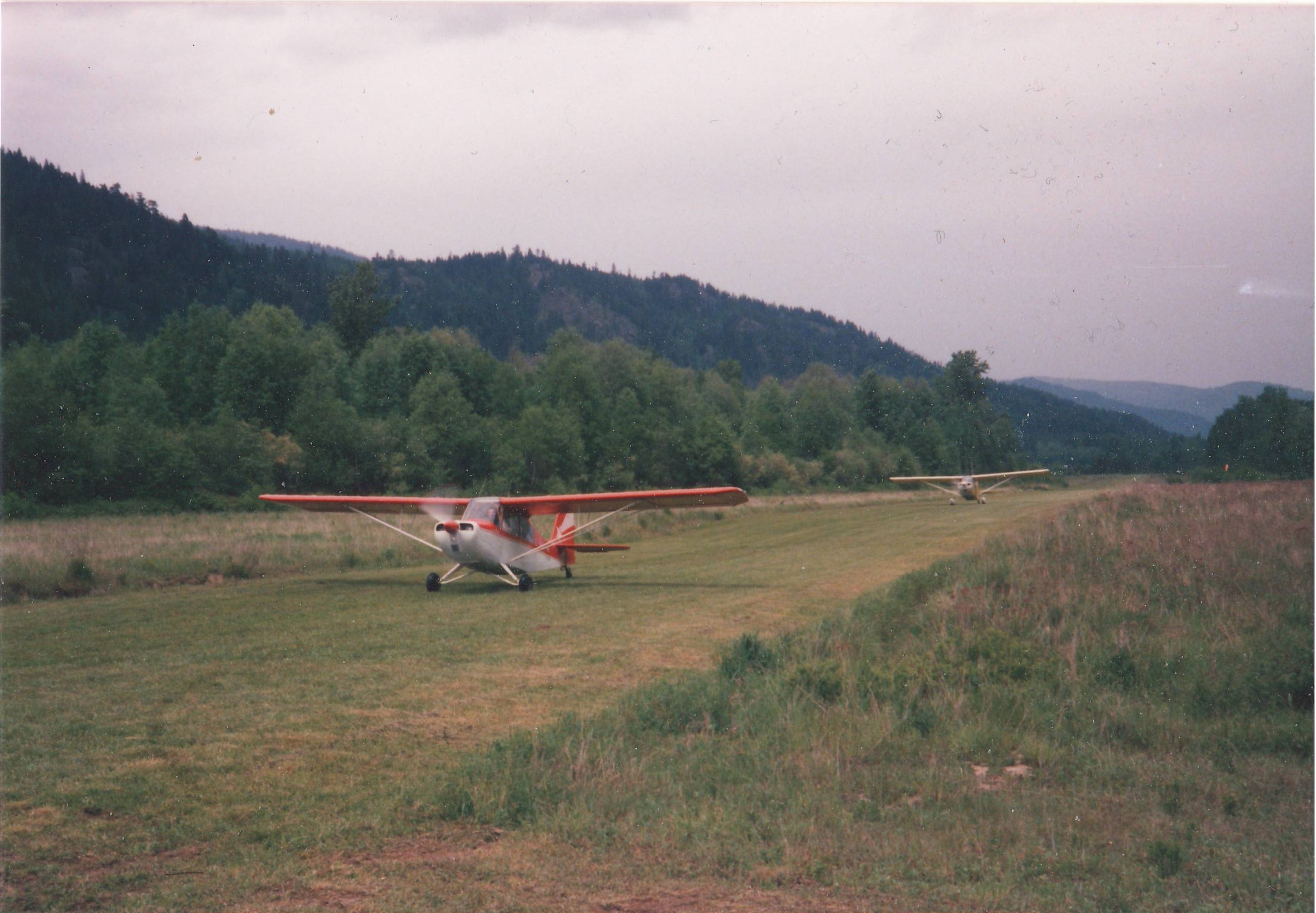
The runway at Hackney is grass. That may not sound as good as asphalt or concrete, but it is actually very nice. It’s like landing on velvet. If you’re not lined up perfectly your tires slide on the grass until you get straightened out. Of course, if it has rained or the grass is worn out you might have a little trouble.

There were half a dozen other airplanes in the same hanger along with mine, including two big ones — a Stearman biplane and a twin-engine Beechcraft. Sometimes the Stearman was parked in front of my plane. It was too heavy for me to push out of the way but I found I could stand on one tire and “walk”  it along. By moving from one tire to the other a few times I could make enough room to get my plane out.

I thought I’d had it one day at Hackney. My car was parked in the big open area in front of the hanger and I had gone out to it to get something. A fellow I’d seen at Henley had been buzzing the short crosswind runway in a little biplane. He had purchased it from the same guy at Henley who sold me his parachute. He was landing on the main runway though when I got to my car. His touchdown went OK, but then things got out of hand. He applied power to regain rudder control but veered sharply off the runway and was headed right at me with full power on at forty miles an hour.

I was standing on the other side of my car from him. I had a few moments to decide what to do but my none of my options were good. If I ran left or the right he might veer enough to hit me. I decided that the car might protect me. I closed the door of the car and crouched beside it. The fuel tank might rupture and I’d get burned, but by now all my other options were closed out.

Amazingly, he was able to turn at the last second and head back toward the runway. There was a three-foot bank up to the runway there and he bounced over it. Now he headed across the runway at an angle. He had enough speed to veer again and take off before he crashed into the pine trees he on the other side of the runway. I never saw the pilot or the plane again. I didn’t check for residue on the runway.

Landing strip at Ohlmstead Sky Ranch — sans dandelions.

I’m getting a little ahead of the story line, but it wasn’t long until I landed on another grass strip. That was at Lee Olmstead’s place called Olmstead Sky Ranch. Four of us flew over to his grass strip from the Sandpoint airport. It was two or three miles away. I landed last. As I turned to final approach I saw a bright yellow line between the pines. Had to be dandelions on the runway.

I then made a second little mistake. I aimed to touch down near the start of the runway so I’d have ample room to go around for another try at landing if things didn’t look good. My first little mistake had been not asking a few more questions before we left Sandpoint.

My plane immediately started sliding off the runway towards the ditch to the left. I reflexively corrected that, thanks to my outrageous experience with drifting cars sideways on gravel roads in my high school days. But now my tires were sliding down the runway at a decided angle. I feared that my left tire would dig in. It didn’t.

By then I figured out what had happened. Smashed dandelion stems are slippery as goose excrement and the runway sloped sharply to the left at this end. That explained both the slide and why the left tire didn’t dig in. I wouldn’t have had this adventure if I’d asked about the best point to touch done at when we were still in Sandpoint. I’d have known the runway wasn’t level on that end, and to land further down the runway. But I’d have missed the adventure.

I used to tell my kids two wrongs don’t make a right. They’d always say, “Yeah, but three do.” In aviation, one mistake rarely creates a problem, but two often do and three are often fatal.

More about the Steve, the Beechcraft and grass strips later…

Yellow Citabria

Driving up to Henley for some kind of aviating on weekends — and any good soaring days — was my routine for several years. Of course, I was now focused on aerobatics in my newly-acquired Citabria (hangared at Henley).  I was improving my loops and adding other aerobatic figures, but having no success with rolls.

[Nice, short videos of basic aerobatic figures. Click the image to the right to see hints.]

One weekend, when I returned from an aerobatic session and taxied up to the fuel pumps, there was a yellow Citabria. The owner — Dave Cook — was sitting in the restaurant near the fuel pumps. He came out to see who had arrived in the green Citabria.

We talked about our planes and aerobatics and I told Dave about my problem with rolls. He offered to go up with me and show me how to do it. He had two parachutes in his plane so we took it up for some roll instruction. The secret was surprisingly simple.

Dave did one roll, explaining that he was putting the stick hard over to the left and applying full rudder. Rather brute force. (Much more moderate control works in a Pitts.) I tried the next roll, and to my surprise, it went well. The surprising thing was that rolls were instantly no longer intimidating. I’ve recently figured out that Dave’s method doubles up what’s called a rudder roll with an aileron roll.

I also learned that Dave was a certified aerobatics instructor and had worked at the famous Art Scholl [YouTube video] school of aerobatics. Dave had moved to Sandpoint, Idaho — 25 miles north of Henley — where he was teaching school. He invited me to come up to his hangar at the airport there the next weekend. I happily accepted.

Serendipity again… That day was the start of a new adventure…

It might go without saying, but aerobatics is totally absorbing. It’s much like racing sailboats in that way. No matter how good you get, you must focus on the moment and anticipate the next one while striving to do your best. Steve Wolf always knew what was coming next, and he could describe it fluidly.