An urge to build a boat of my own sprang from a picnic for McPherson College juniors. A classmate brought a small hydroplane that he had built. He let several of us take it out for a run. It only had a 10 horsepower motor, but it skimmed over the water at maybe 15 knots. I toyed with the idea of building one, but I had few funds and no motor.
I was in the Army soon after that, and then engineering school. A severe recession had set in by the time I graduated. I did find a job, but it barely paid our living expenses.
Boats probably never entered my mind in those busy, lean years. But like flying, it was another of the things I told Marcia I was going to do when I grew up.
An opportunity to show I had the skills to advance to better job came along a while later. It was a temporary project to solve some problems that HP had with their microwave products. By coincidence, I had been reading up on microwave engineering. Must have been serendipity.
I solved those problems, and soon was working full time in HP’s development lab. About twenty engineers there were in a sailing club, and that intrigued me. However, the boats they raced were expensive, ungainly, and easy to capsize. Somehow I knew better than to get sucked into that attraction.
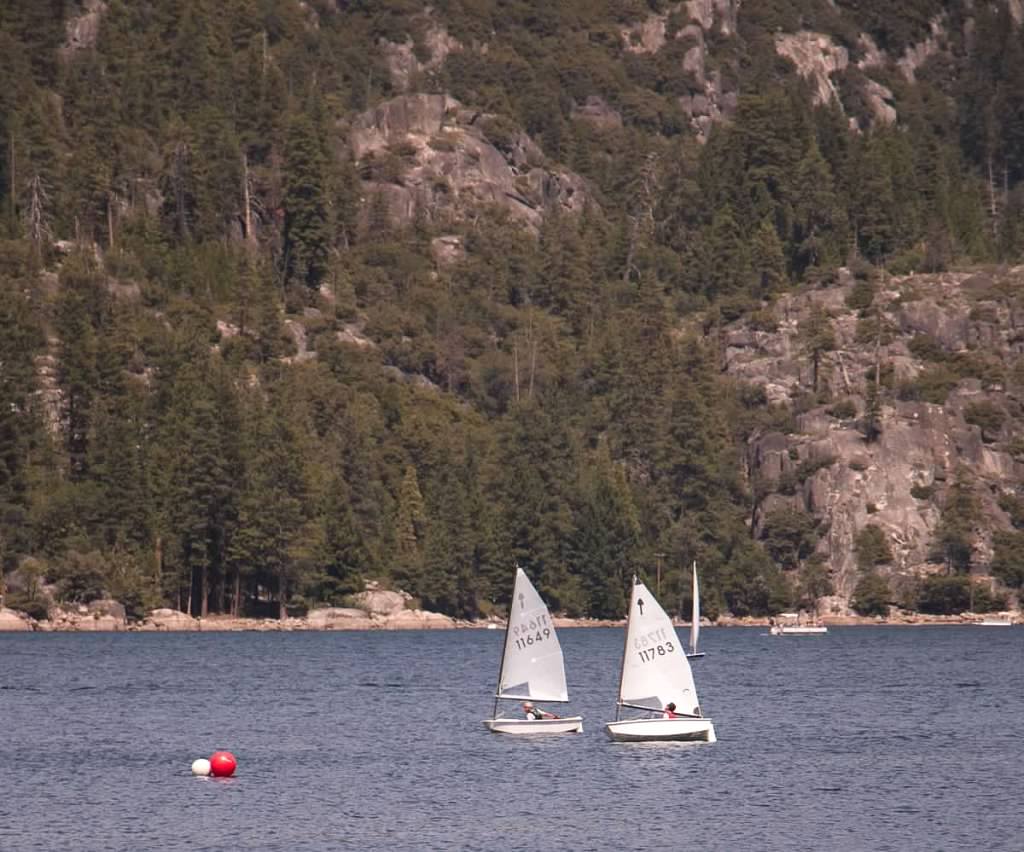 Several sailing club members grew tired of those clunker boats, and a year or so later decided to start a new sailing club. They chose the El Toro as the club boat. El Toros are a simple dinghy, and the El Toro racing class was the largest in the world. The club organizers knew that in racing, the size and speed of the boat are not where the fun comes from. Racing is where the fun is.
The organizers negotiated a group discount for new El Toros. If we could line up orders for a dozen, they would cost $450. We had more than a dozen takers, and soon I was a new El Toro owner. It was built of fiberglass instead of traditional wood. It was light enough to carry by yourself, and maintenance was zero. It also had air-tight flotation compartments. You could get back in and bail it out if you capsized.
Now all I needed to do was learn how to sail it. Dave Gildea, one of my friends, said he could teach me in an hour or so. The El Toro has only one sail. It’s easy to rig, and it’s easy to handle. Dave brought his boat to show me how to sail, and I followed along in mine. I was soon sailing on my own. Racing is another matter altogether, though.
Because of the tides, our races alternated between Steven’s Creek Reservoir and two spots along San Francisco Bay. We knew them as bullship races (get it?). I think my first race was at Steven’s Creek. I imagine that I finished close to last, even though I put in quite a bit of practice beforehand. In any case, I’m sure we went for pizza and beer, probably at Round Table.

 Didit.Live
I remember the races at Stevens Creek fondly, and at least once us girls got to go for pizza afterwards too. And one of the guys I remember had a wife who was a school teacher and I recall watching her grade papers with a red pen while sitting in their car! I thought being a pretty, young school teacher was something to be!
LikeLike
That was a marvelous place. I wonder, did they get the dam fixed?
LikeLike
I remember going to watch the races. Once we got to go get hamburgers with everyone. It was an easy boat to learn to sail. When Nancy learned to drive we would take it to Vasona to sail!!
LikeLike