I was in my upper 60s when I started bicycle touring. I found myself without a company car after some “downsizing”. I thought what the heck? I don’t need no stinkin’ car. I’ll commute to work on my bike. I didn’t want to use my nice touring bicycle, so I converted my 12-speed Bianchi to 18 speeds, and rode it in fair weather. I rode my mountain bike when the weather was nasty.
Riding with the bicycle club in addition to commuting put me in top shape. My first tour was well within my capability. The problem was, it was too short. I decided two weeks for my second tour would be about right. (I found that it was — for that kind of tour.)
Many Cycle America tours are segments of a coast-to-coast ride. Each tour starts where the last one ended. For this one, I drove to the Helena airport to park — $10 per week 🙂 — and Cycle America picked several of us up there. We drove to West Glacier, which was where my tour ended the summer before.
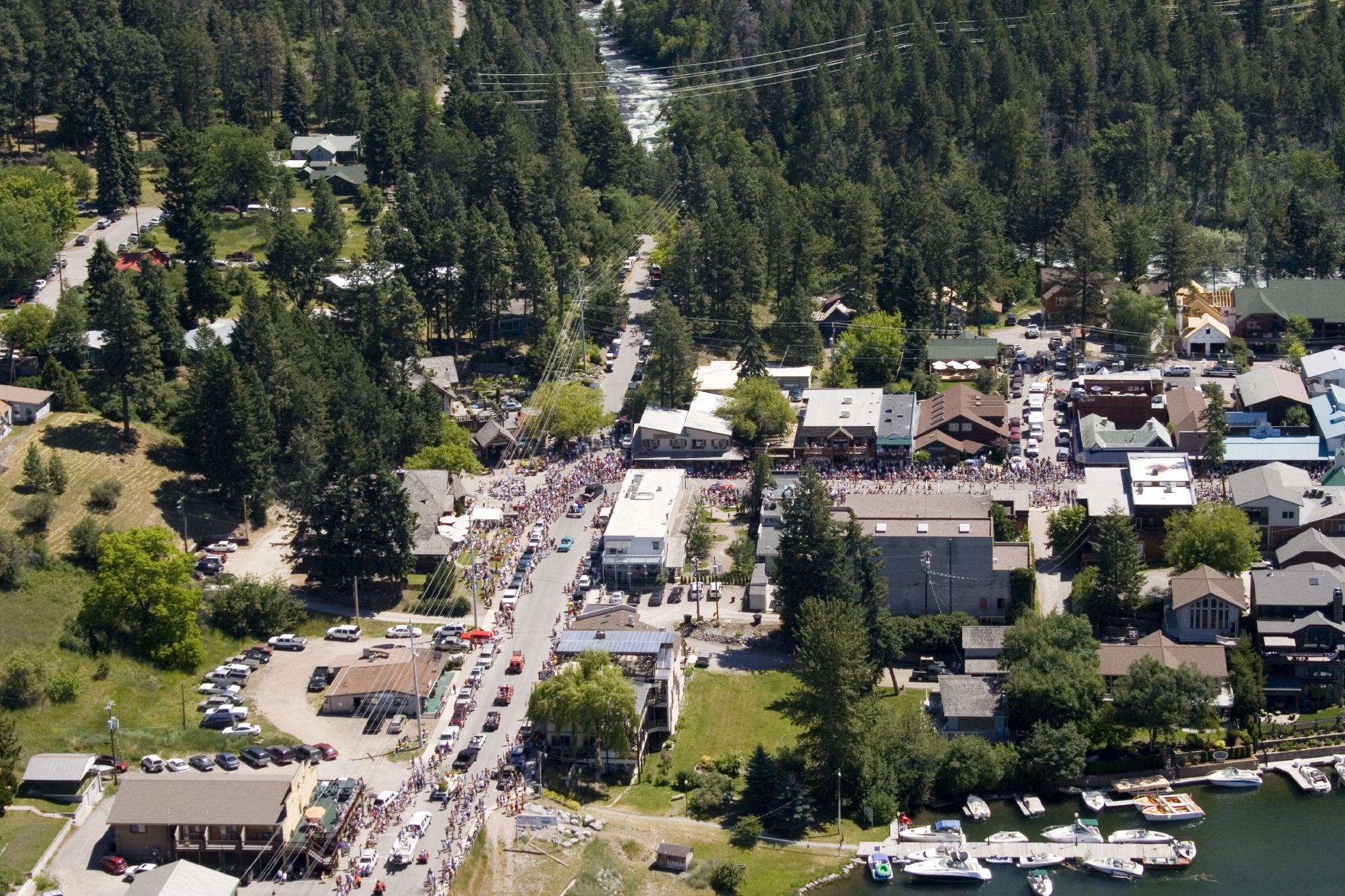
The first leg of our tour of Montana was from West Glacier to the little town of Bigfork, Montana, which used to be a rough-and-tumble logging town. It’s primarily an art colony now. We camped at the high school. You could sleep in the gym or in your tent. The gym did not seem conducive to a good night’s sleep, so I only showered there.
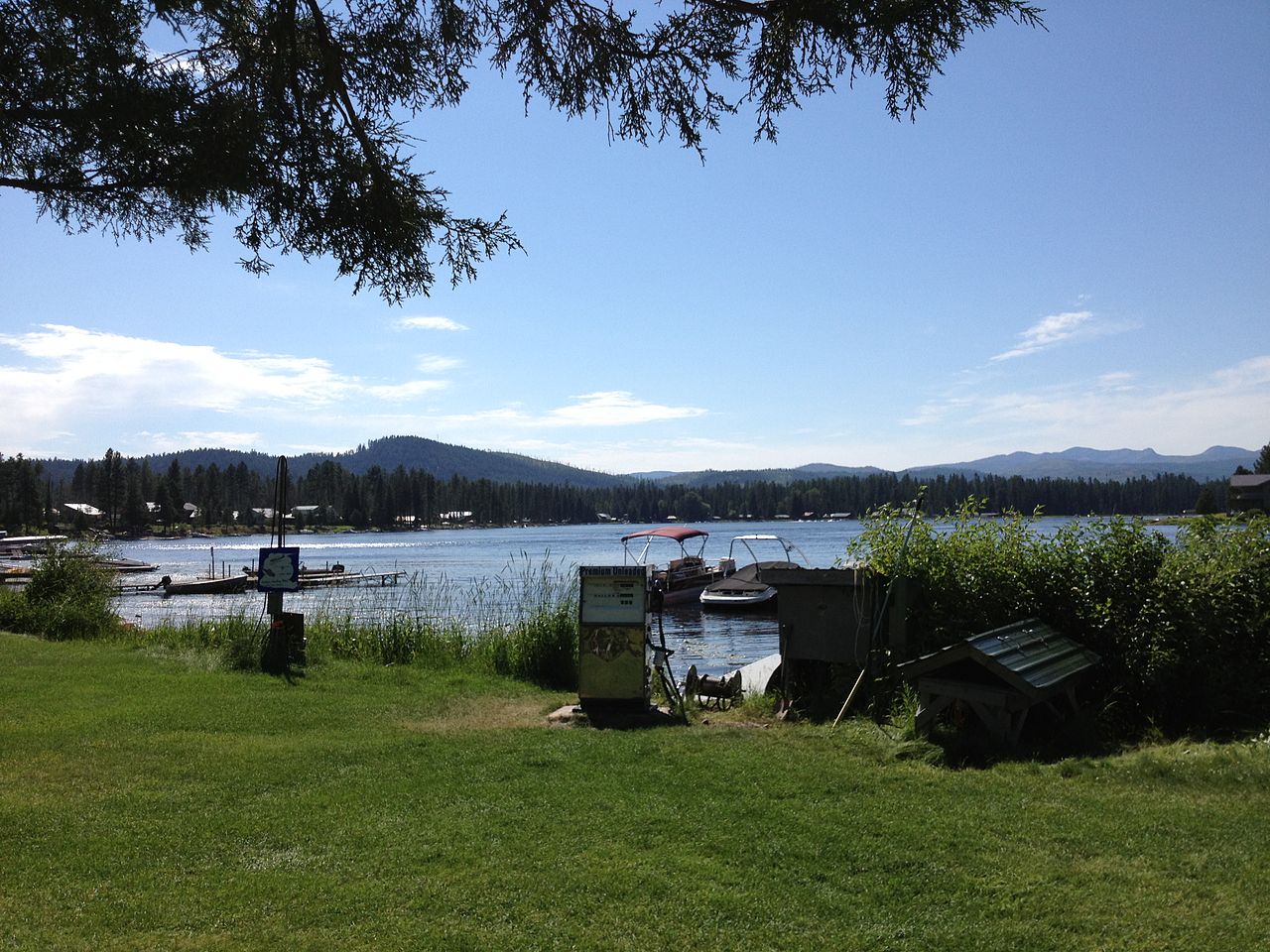
The next leg was sixty five miles through the Swan River Valley, a world-famous bucket list route. We ended up at Seeley Lake, another nice little town.
The next day we stopped at Lincoln, where Ted Kaczynski, the Unabomber, had holed up. Lincoln is one of the few real towns in the mountains that still exist. It is just the right size, and isolated enough to prosper.
We were riding in the middle of the summer, but the weather turned cold and drizzly the next day. I only had fingerless gloves, and my hands were painful from the cold. When we got Helena we stopped at a bike shop that some of the riders knew about. I snagged a pair of full-finger gloves there. What a relief.
We went on to Townsend on the Missouri River that day. It’s near Three Forks, where the Missouri headwaters begin. The Jefferson, Madison and Gallatin rivers all squeeze through a narrow gap in a big ridge there to form the Missouri. I still remember the gorgeous sunset we had at Townsend.
The next leg was a long ride up the Madison River. The headwind and altitude made it a real challenge. We ate at Wheat Montana along the way. They grow and grind their own wheat, bake the bread and make wonderful sandwiches. After fighting the wind most of the way, we arrived at a beautiful campground near West Yellowstone.
The next day we took a short ride through the northwest corner of Yellowstone National Park. We saw many buffalo, a “river” of obsidian, and the mineral terraces at Mammoth Hot Springs along the way. We ended up at Gardener on the Yellowstone river. It is a small (pop = 900) one-sided town. Yellowstone is on the other side of the main street. We camped on the lawn behind the all-in-one public school there.
We were off our bikes the next day. Many of us took a bus tour of the main attractions at Yellowstone: We saw hotsprings, mineral formations, wildlife, Yellowstone Falls, the lake, Old Faithful, etc. At one point, we spotted what looked like a wolf. It was a coyote though. The driver explain that after wolves were eradicated in Yellowstone, the coyotes there evolved to fill the wolf niche. They became large enough to take down deer and elk with ease.
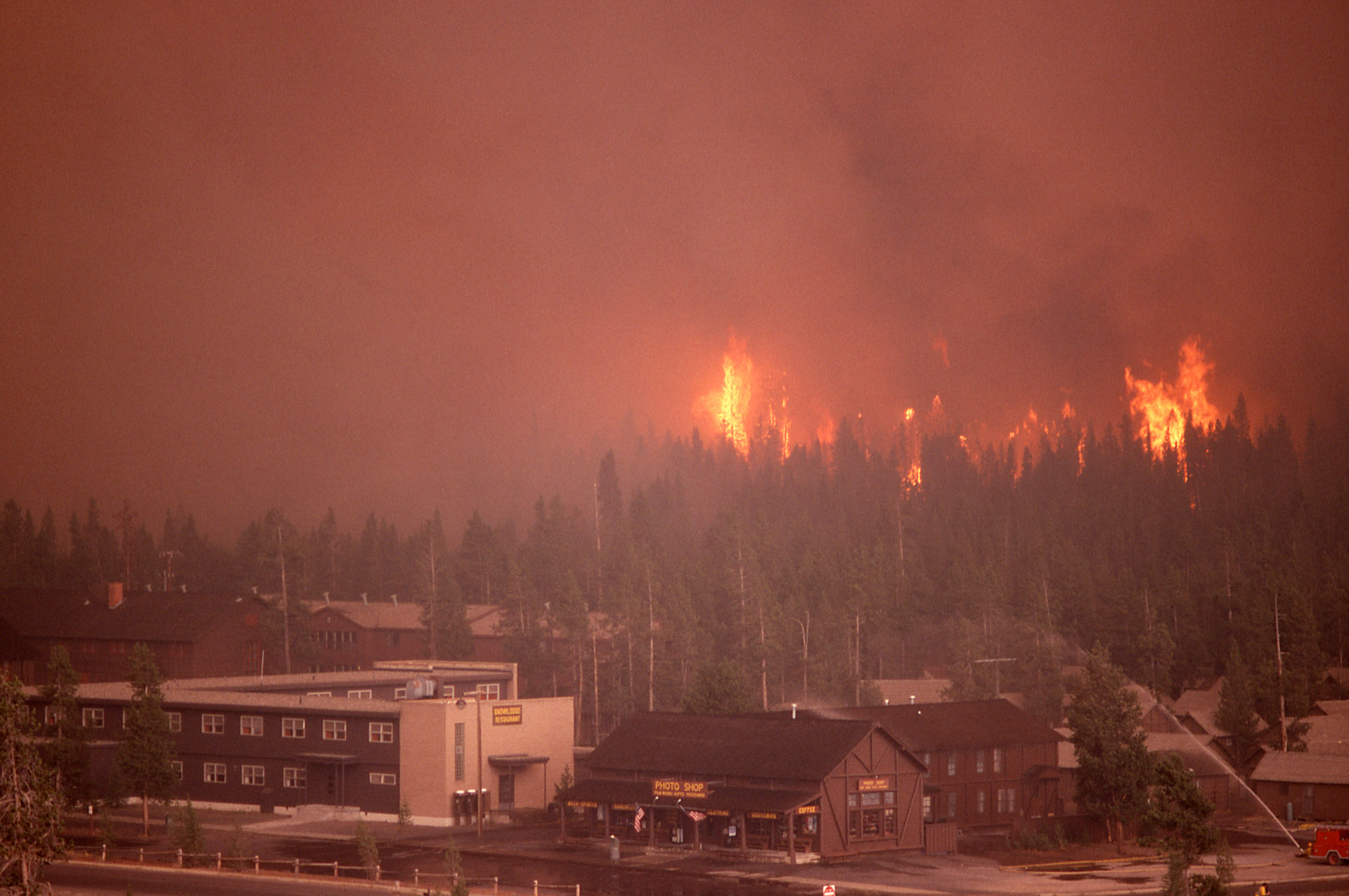 Our driver had been at Yellowstone for many years. He was at Yellowstone Lodge when the 1988 fires devasted the park. They thought they were safe, but the wind shifted and cut off the escape route.
He had a plan though. He could drive the bus out in the big bare area around Old Faithful while everything burned around them. Fortunately, the wind changed again, and the firefighters were able to stop the fire several minutes before it reached the lodge. If the lodge went, it would have been an irreplaceable loss.
The rest of our tour after Gardener followed the Yellowstone river. We were now on the return route that Lewis and Clark took. Just like the river, the ride was all downhill from there. Well not really. There were more than enough ups and downs to get a good workout every day. Livingston has a grand old train depot. It was part of the railroad’s enticement to get eastern grandees to visit Yellowstone. They put their passengers on stage coaches at Livingston for the trip up to Yellowstone.
If you’ve driven across Montana, you know the road goes on and on and on. We were covering it 70 miles at a time. We rode on the shoulder of Interstate 90 some, and on side roads when we could. It might seem that going that distance would be boring. But it’s not when you travel on a bicycle. Unlike traveling in a car, your mind is occupied with the details of the slowly unfolding landscape, not the slow passage of time.
We camped along the Boulder River at the little town of Big Timber (which now has a Tesla charging station) after lunch at Livingston. The next stop was the big town of Billings, and after that we camped at the small towns of Forsyth and Glendive. The tour ended at Glendive, which is about 20 miles from North Dakota. The next day, we rode all the way back to Helena in a van. Now that was boring.

 Didit.Live
What a great bike ride. So much you saw!
LikeLike
Really good shew, I’d say, old chap.
LikeLike
Good trip, I recall that school in Gardener from out Yellowstone trip. No bicycles be we loved the yellow bus tour ;-). I think Yellowstone is one of my favorite spots.
LikeLike
Do not be unduly alarmed. This is just a test.
LikeLiked by 1 person
A remarkable adventure.
LikeLiked by 1 person